
Sprinting with Javelin
Javelin Sprintdays
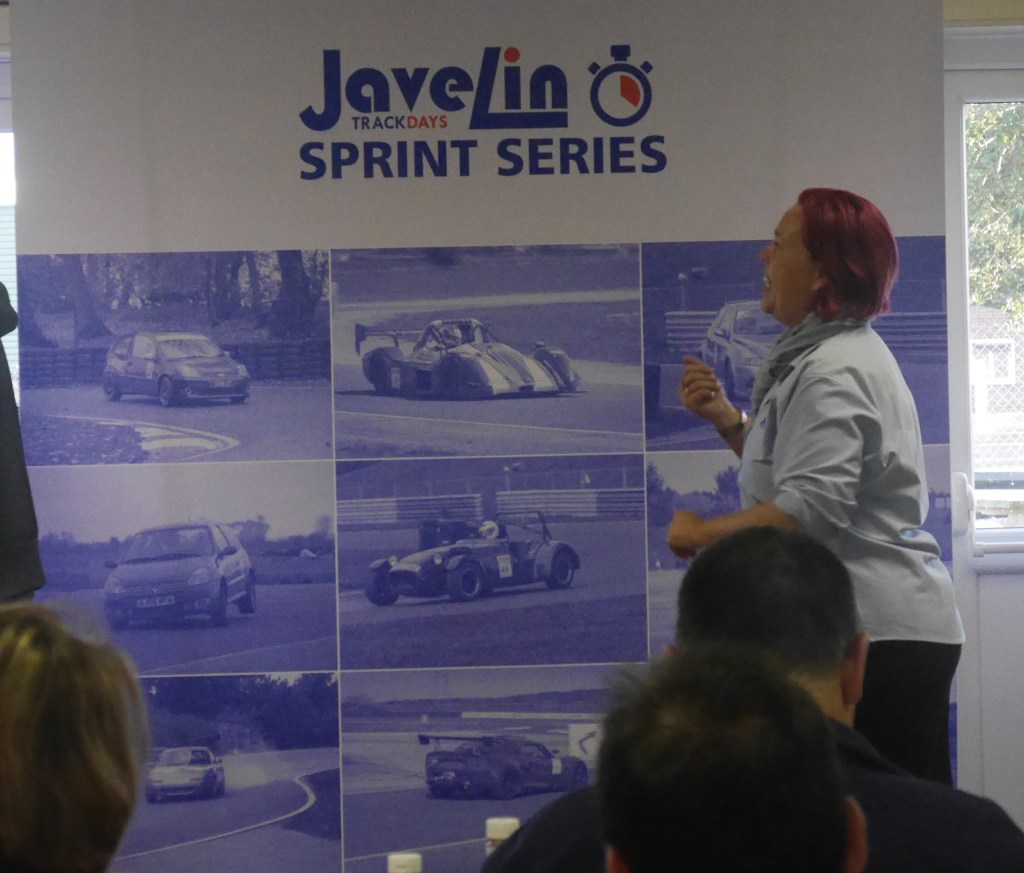
Sprint events organised by Javelin are a fairly recent phenomenon. Javelin are a Trackday organising company that came into being at the turn of the millennium and after successfully building their Trackday business to become a leading player in Trackdays, Javelin’s first venture into sprinting was in 2007 with a series for Toyota manufactured vehicles. An ‘X’ class for all other manufacturers was added in 2014 this was divided into a series of different classes to become Javelin Sprintdays.
The ‘Sprintdays’ classes were run alongside the Toyota classes until 2016 when it became so popular that a split was made from the Toyota series and Javelin ran the two events as two separate series. In 2017 Javelin added Mazda MX5 to the Toyota series as a ‘separate’ series and in 2018 amalgamated Toyota & Mazda, with the addition of Subaru, as a combined Japanese series that caters for all Japanese manufactured vehicles. In addition, Toyota, Mazda, Subaru and from 2019, Mitsubishi and Honda vehicles are entered into their own series within the umbrella of the Japanese series. So, for these manufacturers, you get two sprint competitions for the price of one.
From 2020 the Javelin plan was to run the Sprint Events in two different series [Javelin Trackdays Sprint Series (JTSS) And Japanese Sprint Series (JSS)]; utilising the same 6 different venues, but on different dates. However, for reasons that are not entirely clear, prior entries for the Japanese series were so poor that in February 2020 Javelin pulled the stand-alone status of the Japanese series and merged it with the Javelin Trackday Sprint Series. Although for 2020 there will be no separate Japanese series, the Mazda, Subaru, Mitsubishi and Honda classes are still alive within the JTSS series and the best drivers in those cars will still be competing for championship honours. In addition, two new Class Championships for German and for French manufactured cars have been added and, as was the case in 2019, single seater racing cars and Caterham & Westfield type cars will all compete in their own classes in the T89 T series which will be run alongside the JTSS series.
From 2020 Each Championship is run over 7 rounds with the best five scores to count. There are currently 18 classes in the JTSS series, 4 classes in the French Series, 6 classes in the German Series, 22 classes in the Toyota Series, 4 classes in the Subaru Series, 10 Classes in the Mazda Series, 4 Classes in the Mitsubishi Series and 5 Classes in the Honda Series. Phew… something for everyone?
In addition, in March 2020, Javelin is also running a ‘Taster’ Trackday/Sprint at Blyton Park to allow would-be sprinters to ‘test the water’. The Trackday will be held in the morning and a shortened [in number of runs] Sprint held in the afternoon.
IOPD
Since all Javelin Sprint Series are run outside of the auspices of MSUK, then Javelin events are authorised by IOPD [International Organisation of Professional Drivers]. The following quotation is from the IOPD website http://iopd.org.uk/:
By having the event authorised by the IOPD and put into the approved event status system, the event then: Becomes legal and authorised by Act of Parliament under Special Instrument 1371 and the organisers, officials and participants are exempt from prosecution under the most serious Road Traffic Act offences.
Javelin Sprint Events
Javelin events are run slightly different to MSUK events and many drivers prefer Javelin’s more friendly less bureaucratic, approach and their highly efficient organisation in giving more sprints runs and better ‘bang for your buck’. There are however, one or two slight drawbacks which we will consider later. Javelin events are organised through the website http://www.javelinsprintdays.co.uk/sprint/ and there are also two very active FB forums:
https://www.facebook.com/groups/JavelinSprintdays/ or https://www.facebook.com/groups/JapaneseSprintSeries/about/
Those considering entry to the series are well advised to enrol on the forum and technical questions will invariably have an answer either from Javelin or other competitors very quickly. Some of the conversations in the Forums become very technical and answers reflect the acute depth of knowledge of the average Javelin competitor.
Sprint Venues
Sprint venues to be used in the 2020 Javelin Sprint Series include the following Tracks.
| 2020 Date | VENUE | LOCATION | Length (miles) | WEBSITE |
| 19/04 | Blyton Park | Nr Gainsborough | 1.40 | www.blytonpark.co.uk/ |
| 10/05 | Snetterton | Nr Thetford | 2.97 | www.snetterton.co.uk/ |
| 04/07 | Anglesey | Nr Valley, Anglesey | 2.00 | www.angleseycircuit.com/ |
| 01/08 02/08 | Three Sisters | Wigan | 0.93 | https://threesisterscircuit.co.uk/ |
| 20/09 | Croft | Nr Darlington | 2.05 | www.croftcircuit.co.uk/ |
| 10/10 | Cadwell Park | Louth, Lincs | 2.10 | www.cadwellpark.co.uk/ |
Overall Javelin Sprint Champions
Javelin Sprintdays
- 2014 Simon Warr Alfa Romeo 147GTA
- 2015 Simon Warr Alfa Romeo 147GTA
- 2016 Tony Pearman Lotus Elise S1
- 2017 Tim Bedford Subaru Impreza WRX
- 2018 Kenny Brookes Mitsubishi Evo 7
- 2019 Stuart Drewell Ariel Atom 3.5R
- 2020 To Be Decided …
RRG Toyota Sprint Series
- 2008 Adrian Smith Toyota Corolla GT4
- 2009 Jonny Milner Toyota Celica GT4
- 2010 Adrian Smith Toyota Corolla GT4X
- 2011 Adrian Smith Toyota Corolla GT4X
- 2012 Iain Gard Toyota Celica ST205
- 2013 Iain Gard Toyota Celica ST205
- 2014 Adrian Smith Toyota GT86
- 2015 Adrian Smith Toyota GT86
- 2016 Adrian Smith Toyota GT86
- 2017 Andy Bunny Toyota Celica ST185
Japanese Sprint Series
- 2018 Adrian Smith Toyota GT86
- 2019 Adrian Smith Toyota GT86
- 2020 To Be Decided …
MTEC Brakes Mazda Sprint Series
- 2017 Clive Fulcher Eunos
- 2018 Kevin Wilde Mazda MX5 Turbo
- 2019 Ben Edwards Mazda RX8
- 2020 To Be Decided …
White Line Subaru Sprint Series
- 2019 Tim Bedford Subaru Impreza
- 2020 To Be Decided …
T89 Class ‘T’
- 2019 Aaron Gaughran Norma
- 2020 To Be Decided …
French Car Series
- 2020 To Be Decided …
German Car Series
- 2020 To Be Decided …
Mitsubishi Sprint Series
- 2020 To Be Decided …
Honda Sprint Series
- 2020 To Be Decided …
Javelin Drawbacks
Regulations and classes change every year and have sometime been reactionary to forceful comments from Forum members – although changes in classes and regulations will probably settle down eventually. With class and regulation changes being announced in December, this means that regular competitors – or even newcomers – are sometimes unable to finalise their next season car specification until late in the year. The classes are devised to try and make it fair for all competitors – no matter what level of sophistication is your car.
Javelin are at the bottom of the pile when permanent race track owners fulfil their meeting calendar and if a better offer comes up then this can mean a meeting date or even venue change. For airfield circuits, these are sometime at the whim of the MOD and unexpected events can also mean a venue cancellation at short notice. Although this once disrupted a scheduled Javelin event at short notice, they managed to book another airfield and the event went ahead without issues. However, this can disrupt travel and accommodation plans… The calendar is usually settled by mid-January at the latest with a provisional calendar out before Christmas. However, for 2020 all Sprints are being held on permanent race tracks.
There is no formal protest procedure and most grievances are usually aired via the FB forum. To date, they have been relatively minor…
Javelin advantages
Very cost effective way to enter competitive Motorsport.
Javelin accept entries on a ‘first come, first served’ basis’ and this does mean that you know immediately that your entry has been accepted, unlike MSUK events when, as a rookie driver or even an experienced driver of events, you may not know if you have an entry until shortly before the event [usually within two weeks of the event].
Many seasoned sprinters have realised what a ‘gold’ series it is and there are some refugees from MSUK [formerly MSA] series’ plus a few amongst the Javelin regulars who compete in both.
There is no restriction on the type of car that you may enter or your experience as a driver. It is quite possible to turn up to your very first meeting in a heavily modified Subaru or Radical, sign up for an IOPD license and then compete! You are required to show your road driving license to the organiser’s representative at sign-on.
A crash helmet is required, but it does not necessarily have to meet FIA or MSUK standards. The helmet may be open face, although it will need to be Full-face for open top cars. You do not need flameproof overalls or nomex underwear for saloon cars, but flameproof overalls and gloves are required for open top cars. Drivers of saloon or coupe are just required to wear clothing that covers limbs and gloves and Head Restraint devices are also not required; footwear is optional.
After the track sighting laps, drivers at Javelin events will run one untimed practice lap and then six timed competitive runs; the number of runs might be reduced if track conditions deteriorate in inclement weather or the day is considerably delayed in track incidents; but such occurrences are rare.
Javelin events are very friendly events and although safety is taken seriously and organisation is slick, the atmosphere amongst drivers and organisers is most convivial.
Obtaining a License
You do not need an MSUK license and can take out an IOPD competition license on the day of your first Javelin event. You just complete the IOPD registration form and hand over £20 in cash [complete season] or £10.00 [single event] to the Javelin event staff.
Medical Conditions and Disability
No medical is required and you simply complete the declaration on the IOPD registration form that you are fit to take part.
What kind of car can I use?
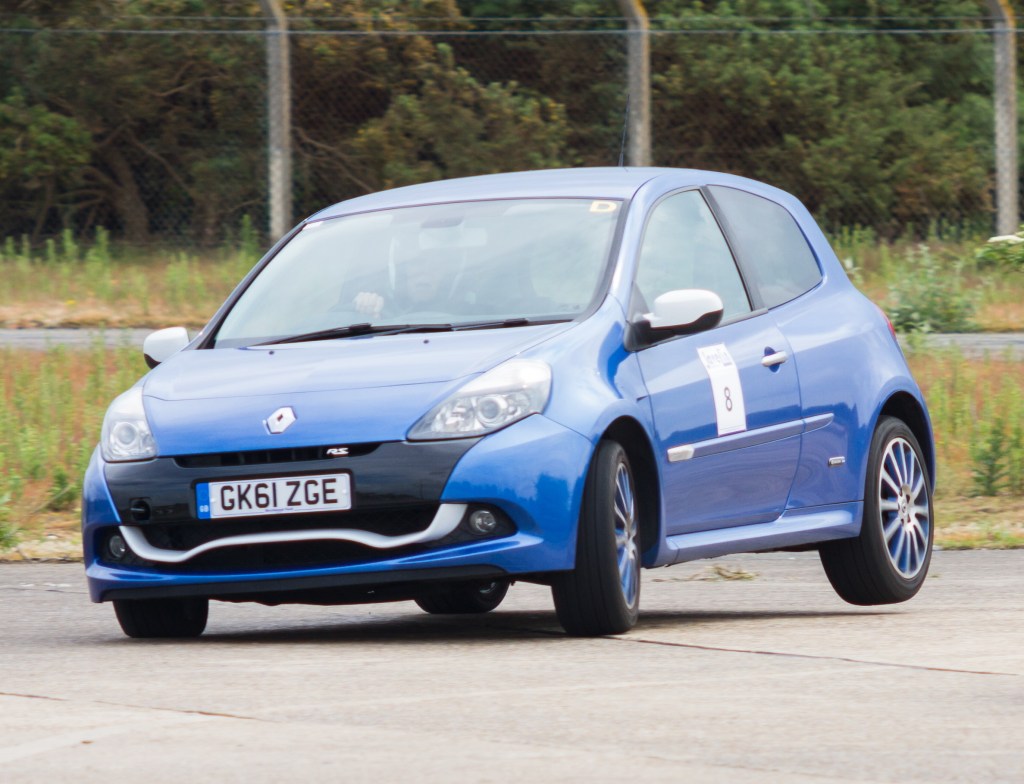
Any well-maintained car that has an MOT and is suitable for use on a Trackday is suitable for a Javelin Sprint. You may use any kind of car from a mundane road-going car to an exotic sports saloon/coupe or even a single seater; there is bound to be a suitable class for almost anything that you may enter. However, open top cars [convertible or Caterham type] may need a rollbar or rollcage unless a hard roof is fitted. Rookie drivers [RS Interclub license holders] in MSUK events are restricted to a car with an engine of less than two litres; in Javelin events you are unrestricted…
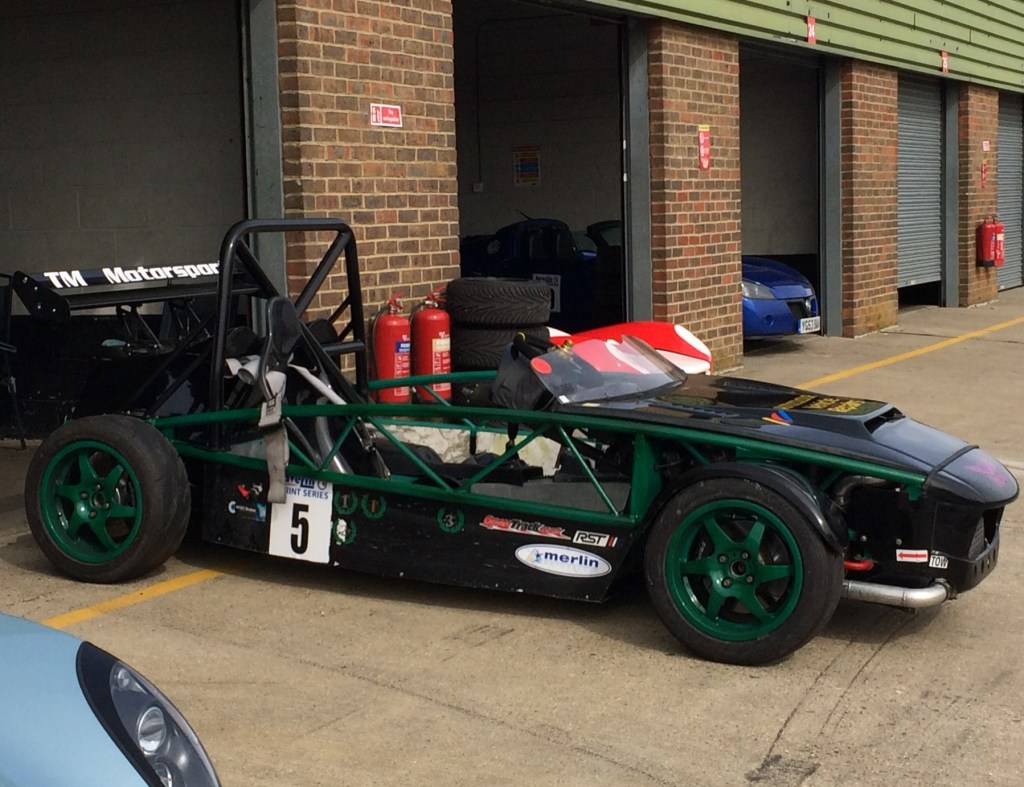
Modified cars that are not road licensed do not require a competition log book.
If your car engine is turbo or supercharged, then an Equivalency Formula [1.4] is applied which in most cases will put you into a higher class category. i.e. 1800 cc x 1.4 = 2520 cc.
How may I prepare my car?
We are mainly concerned with road-going cars here and there is very little extra work required to prepare a car for Javelin sprints.
A well-maintained car with current MOT [if road-going] is a good start. However, the car does not need to have an MOT or Road Tax. Check fluid levels and tyre and brake pads for wear. There is quite a lot of leeway in the technical aspect of what modifications may be done and a close scrutiny of the Javelin Regulations should be made.
- All tyres that are road legal are suitable for Javelin events.
- A timing strut is unnecessary for Javelin events.
- A sticker to indicate ignition key position is not required.
- The negative battery terminal should be marked with yellow insulating tape.
- Road-going cars must run on pump fuel; which for most cars will probably mean running on 95 or 97 octane petrol.
Prepping the car
What clothing do I need?
Firstly you will need a crash helmet in good condition, but it does not necessarily have to meet FIA or MSUK standards. For saloon cars you may use an open-face type helmet although you might choose to use a full-face helmet for better protection. If your car is open top then you must use a full-face helmet with a visor. Extended chin type helmets are disallowed.
You do not need flameproof overalls or nomex underwear for saloon cars, or open coupe type cars. Flameproof overalls and gloves are required for open wheel single-seater cars in the ‘T’ classes. Drivers of saloon or coupe are just required to wear clothing that covers limbs. Gloves and Head Restraint devices are also not required and footwear is optional. Although clothing of a flameproof rating is not mandatory [Javelin do recommend their use], many drivers do wear flameproof clothing and an FHR [Frontal Head Restraint] device for their own protection. However, most saloon or coupe car drivers with a mild state of tune will turn-up with the minimum required. As the bug bites, then a driver will often voluntarily add safety clothing as his car becomes more powerful or he becomes faster. Refer to the Javelin regulations for the latest rules and recommendations.
How do I enter a Javelin Sprint?
Before you enter it is a really good idea to learn something about the events and series. If an event is held at a reasonably close distance from your home [most events are held North of Watford Gap from Snetterton on the East Coast to Anglesey in the West and as far North as Croft in Yorkshire] then go along to an event and spectate [no charges for spectators at Javelin meetings]. Talk to the drivers and their support crews who will usually be happy to answer questions – but don’t bother them whilst they are competing.
Go to the Javelin website http://www.javelinsprintdays.co.uk/sprint/ . Most of the information you require is on the website and a first port of call might be the button marked ‘Regulations’. Print this off and settle down with a cuppa or tipple – your choice and study it carefully. You cannot apply for a competition licence beforehand and must take one out on the day. A medical examination is not required and you will sign a disclaimer to self-testify that you are fit to compete. See example form.
Next study the various vehicle classes. Not matter what state of tune your car is in there is bound to be a suitable class. Just about everything is catered for from bog standard road-going cars through highly modified saloons to specialist single seaters. Newcomers invariably sign up to the Facebook forum and ask other competitors for advice on which class to go in – advice which is freely given.
https://www.facebook.com/groups/JavelinSprintdays/ or https://www.facebook.com/groups/JapaneseSprintSeries/about/
There is also a Guest class for cars that do not fit into the usual classes although if you drive in this class you are not eligible for championship points or an award.
When entering MSUK Speed events one has to apply for a RS Interclub License before entering an event. One is then restricted to driving a vehicle less than 2.0 litres until the RS National category license is attained. However, in Javelin events you may enter any class with any type of car with no restriction.
Before entering an event you will need to register with the Javelin Sprintdays or Japanese Sprints website as appropriate: http://www.javelinsprintdays.co.uk/sprint/ or http://www.japanesesprintseries.com/jsprint1/ . Click on ‘Events and Shop’ and then click on the event in which you are interested and read the information displayed. Take a look at the Entry list to see who your fellow competitors are. This list constantly changes up until the day that entries close. Enter your name, details of your car and class that you wish to enter. If Javelin determines that your declared class is incorrect they may move you into one more suitable on the day.
If you wish to enter the Championship then select the Javelin Championship Registration field. This is an optional choice and since an extra charge of £10 is made, then you might only wish to register if you are doing the whole season – minimum 3 and maximum 6 events. Only the best five events count and so if you do all 6 events then only the points from your best 5 will count. It is also true that the points from an event will not count towards the championship unless you have registered beforehand. If you require Race Numbers then tick the required box. Numbers are automatically supplied at your first event of the season, but if you want them at subsequent events, then you must ask [and pay] for additional sets. Entries are accepted [if not oversubscribed] until the Wednesday before the event. Add the entry to the Shopping Cart and then enter other events if you so wish. Then check out and pay – usually via Paypal.
Javelin accepts entries on a ‘first come, first served’ basis. With an average entry of about 90 drivers for Sprintdays classes there is usually room for an entry until the last two weeks or so before an event when the last remaining places might be snapped up. A ‘Book Early’ price is usually in operation until one week beforehand, so booking early also makes financial sense. Once your entry has been submitted and accepted then you are automatically accepted to drive at the event; unlike MSUK events when you may not know if your entry has been accepted until a week or two before the event. Javelin do keep a ‘reserve’ list, much to the relief of several championship contenders in a previous season who, due to late entry, found themselves without an entry when a meeting suddenly became oversubscribed…
Where can I stay?
What happens on the day?
Always read Javelin’s download documentation notes and final instructions and try to do that prior to the day!
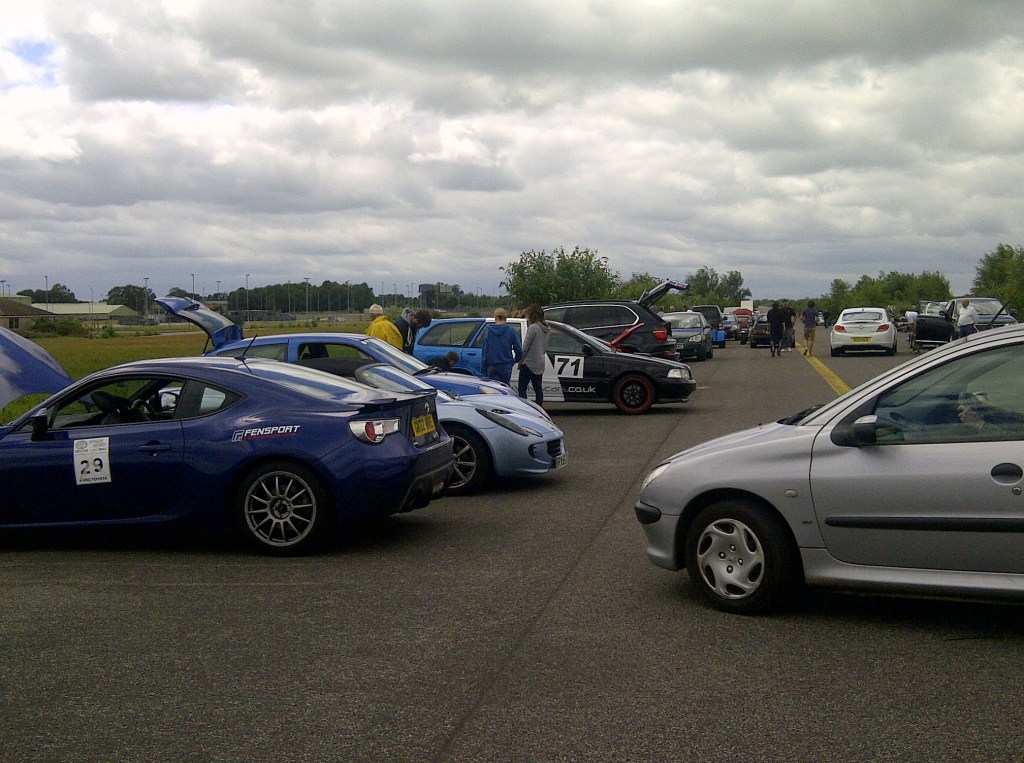
A typical sprint meeting may go something like this: you will arrive early in the morning [typically 07.00 hours] and on arrival in the paddock will find somewhere to park your car. If your car is a road-going class then you may have driven to the circuit and if the car is not then you may arrive with the car on a trailer. Some circuits have more paddock space than others and the earlier you arrive the closer you will be able to park to the action. Javelin does not group cars in classes in an allocated area as happens at MSUK events.
Unload the car and prepare it for scrutineering. Remove anything inside the cockpit and the boot that may move during your sprint runs. A timing strut is not required for Javelin Sprints as the front of the car will break the timing beam as soon as it passes. Attach Towing Bracket[s] and place your helmet and your completed CVF [Class Verification Form] and VSD [Vehicle Safety Declaration] in the car. Undo the bonnet catch so that the Scrutineer may lift the bonnet quickly and easily when you enter the Scrutineering Bay or Area. Competitors Race Numbers do not necessarily have to be affixed at this point.
A departure from those who have experienced MSUK events is that you present your car for Scrutineering and Noise testing prior to signing on; so join the queue. There will be an allocated area [if an airfield track] or in a garage or purpose built scrutineering bay if the sprint is organised at a more permanent circuit. Scrutineering checks will mainly be with regard to safety issues and the Scrutineer will check and countersign your CVF and VSD if the checks are satisfactorily concluded. An MOT form may be required if the car is road-going. Helmets and Flameproof overalls [where required – single seaters only] and will be visually inspected and NOT with reference to FIA/MSUK regulations or labels.
Once scrutineered you must present yourself to the sign-on clerks at Race Control who will check your road driving license, signed CVF [only required first time the car is entered – unless the car spec changes], signed VSD, IOPD license; if your first event of the season then you must complete the IOPD registration form and hand over £20 in cash [complete season] or £10.00 [single event]. You will also collect your Race Numbers that have been affixed to a white Javelin background. Attach your Race Numbers to the car doors and complete any safety checks on the car i.e. check tyre pressures, adjust as necessary and you are good to go. You may also be given Sponsorship decals which you are expected to display on your car. Championship points may be withheld if you fail to display the decals…
Noise Test
Briefing
The mandatory driver’s briefing will typically be around 08.45 during which the organisers will explain how the day will unfold, sprint starting procedures and what flags will be used and any safety instructions and the procedure if your run is ‘red-flagged’. Often a mention may be made of cones and also track limits; touching a cone or abusing track limits may incur a penalty, which is usually the voiding of that run. The changeover procedure for dual drivers will also be discussed. As the Briefing ends, the CotC [Clerk of the Course] will invite questions. If something is unclear then do ask the question. A wristband will be attached to your wrist once the briefing is over. If you miss the briefing you will not be able to compete.
Sighting Laps
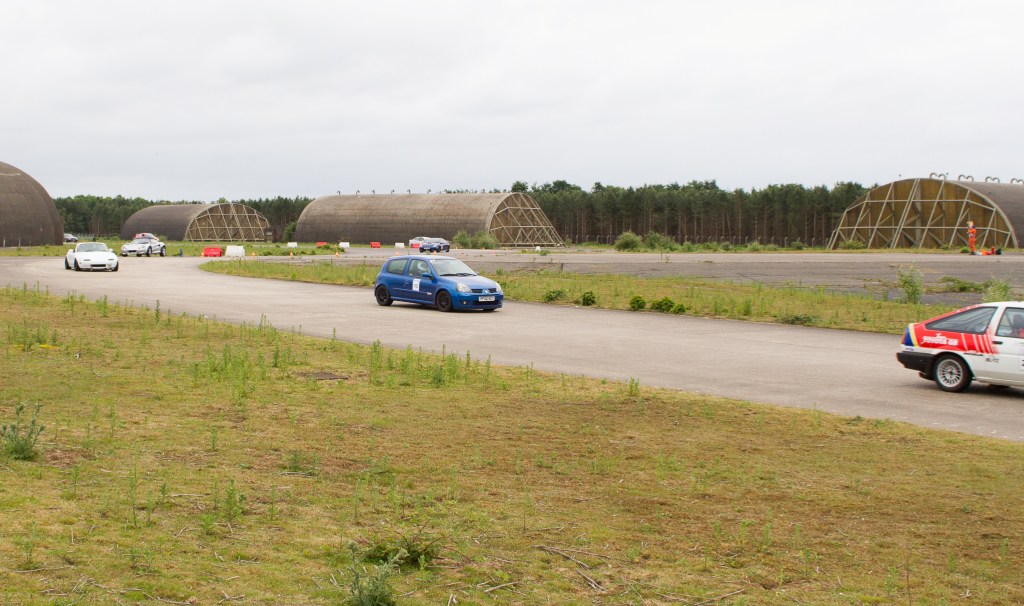
Generally at Javelin meetings you are not asked to ‘walk the course’, although you may do so if you arrive early enough. Usual procedure immediately after the Briefing is for a ‘convoy run’, often of two sighting laps, in which the drivers line-up and drive the course slowly in a long crocodile – sometimes broken into two groups if there is a large entry. This is a very useful method of spotting the location of the marshals’ posts, track conditions on the day, layout of the corners and any topographical features that may help you identify where to brake, turn-in and pinpoint the apexes and exit points. A lot to take-in.
Learning the course
Start Procedures
A Javelin marshal will strut the paddock and advise drivers of a particular Class when their turn is nigh [they are usually quite good in marking where the competitors for the various classes are parked and who invariably are in many different locations; or the marshal may operate from race control and call drivers up via the loudspeaker. Keep alert or you may miss your run. The first warning is often whilst the previous class is running and that should give you plenty of time to be ready. If your engine needs to be at operating temperature before your run then now is the time to start it to allow sufficient warm-up time. You are not required to put on your helmet before leaving your paddock place and driving down to the start. Attempting to warm-up your tyres by any method is expressly forbidden. Javelin tends to run the fastest classes first and although it is important to run with the other competitors in your own class, the order of running within that class is not particularly important. Being out of class order is only allowed if unavoidable – so long as you manage your run before the last car in any particular run; do not try to ‘game’ the system and if you run ‘out of class’ in order to take advantage of a drying track you will be excluded from that run… If the first driver in the next run has begun, then you will be classified as having missed that particular run.
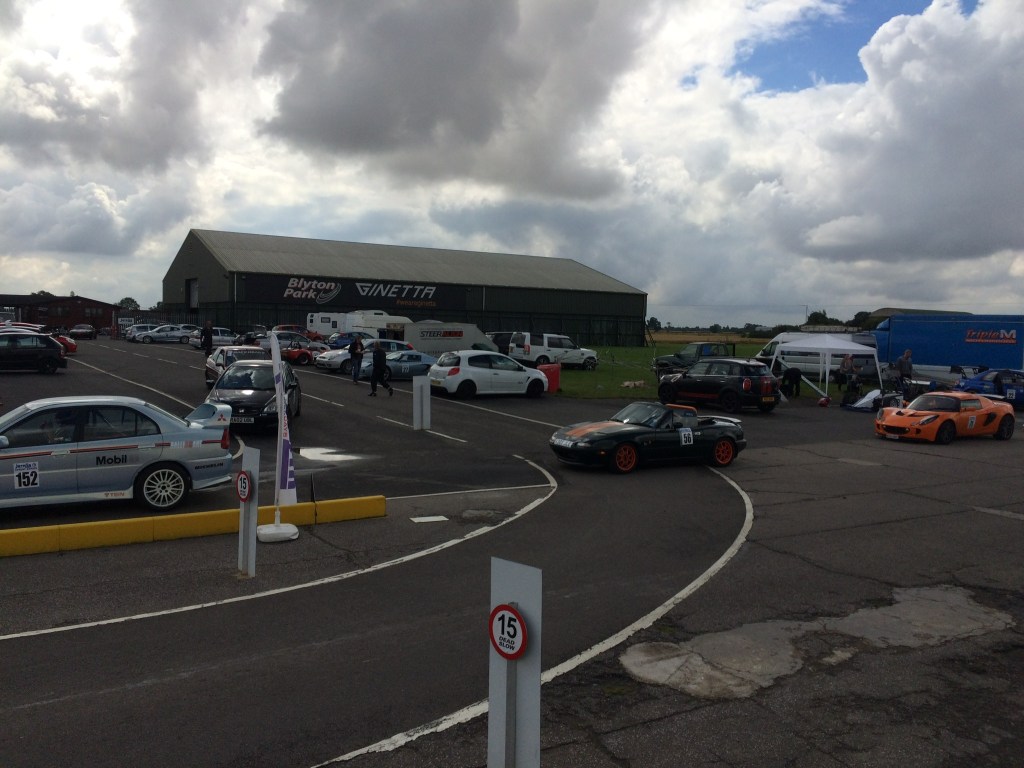
In each run you will join a queue which will wind its way onto the track and to the start gate for the run. Sprint start gates are sometime set in the pit lane exit at permanent tracks.
As you edge your way towards the start you should quickly run through a checklist:
- Is your video camera switched on?
- Is your seat correctly adjusted?
- Are your seatbelts/harness in place and tight?
- Check that your helmet is on and secured [yes really – I once finished a run and then noticed that my helmet was undone] – the start marshal may not always notice…
- Check that all doors and windows are properly closed. If you have left the front passenger window/and or door open; you may not be able to close them when strapped in with a full harness. Ask a marshal or someone handy to shut them for you…
One or two cars from the start I will ensure that the driver’s window is closed.
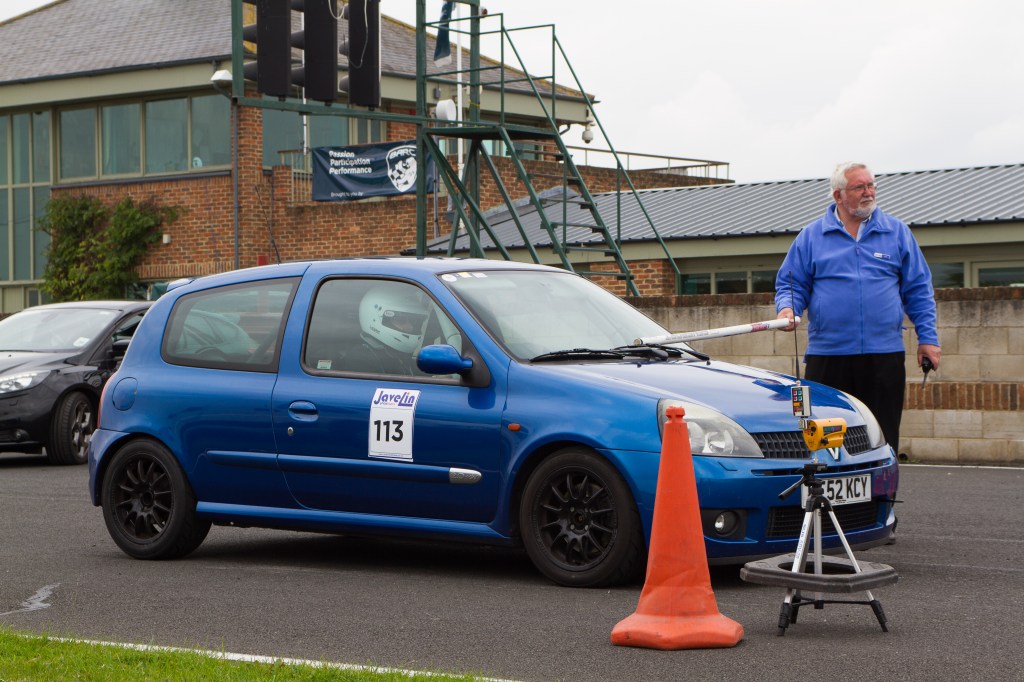
Once it is your turn, the start marshal[s] will position you just before the timing equipment. You may be started by a set of traffic lights or a ‘high tech’ pole may be held in front of your windscreen. Once the light signals green or the pole is lifted you are ‘off’. The timing equipment will not trigger until you break the beam and so you have a few seconds to launch.
Every track has their own method of starting and the methods may differ slightly. If the track is quite short then drivers may be despatched singly to complete their run before the next driver is despatched. Often, drivers are despatched at specified intervals which means that there could be up to three drivers on track at the same time. The interval between drivers is calculated to keep them apart and you are unlikely to catch the driver in front unless he is particularly slow or has a spin or other incident…
Since cars invariably start with cold tyres [no tyre warming allowed] the opening corners may be quite exciting…
The Finish Line is normally denoted by a Chequered Board posted each side of the track. Once you have passed the Finish Line, lift the throttle and brake the car down to a manageable speed. If the Finish line is in the middle of a bend then be careful of your initial slowdown as it is possible to make the car unstable with an abrupt deceleration.
For Sprinting, the paddock entry is likely to be only a short distance from the Finish Line.
If you are dual driving, then, depending on the procedure, you will change drivers in the paddock or in the queue or at an allocated space near the Start.
The Meat of the Event
Practice will typically consist of just one ‘untimed’ run. The purpose of Speed events is to set the fastest time on your run. Each run may be likened to a qualification run in Formula One; however, keeping a cool head, driving smoothly and systematically working on your technique is the best way forward. On your first run, drive fast but within your limits. Try to determine your braking and turn-in points, apexes and exits – I know, a lot to learn but no-one said it will be easy. Subsequent runs should be spent honing the memory you hold for the previous run. Bear in mind that the racing line is all important and once established, you can start to brake later, carry more speed into the turn, accelerate harder and earlier.
In a Javelin Sprint you will make up to 6 timed runs. For your first meeting at a track on which you have not previously competed or even for your very first competitive event, your primary target is to reduce your own times so that you set progressively faster times and by the last run of the day you may start to produce times that are close to others in your class. Some people are faster learners than others and it is no sin to take several events at a particular track before you are ‘on the pace’. Of course, even if you never reach the times that the top drivers in your class achieve, this may be due to a variety of reasons such as the competitiveness of your car and like the majority of competitors you do it just for fun.
Usually, within your class are drivers that are at a similar standard to yourself and it is fun to try and beat them and of course you are always competing against yourself in that every time you set a PB [Personal Best], you will want to beat it. For me, if I set at least one PB in an event, often shaving milliseconds off my times, then it has been a successful meeting – no matter where I might finish.
Flags
Championship Points
The method of awarding points for the overall championship is quite straightforward: 1st = 100, 2nd =99, 3rd =98, 4th = 97 etc down to the last finisher. There are rules that determine what happens in certain circumstances in order to clarify matters and all competitors should read the Javelin championship Regulations.
Up to 2019, the points earned in the overall classification also counted towards the Class position. However, from 2020, points are also awarded to each registered class finisher as follows:-
| Position | 1st | 2nd | 3rd | 4th | 5th | 6th | 7th | 8th | 9th | 10th |
| Points | 25 | 18 | 15 | 12 | 10 | 8 | 6 | 4 | 2 | 1 |
Results and Trophies
In this electronic age; times are usually available instantly and Javelin post times of each run in the Control Office a short time after each run is completed. Or online; by logging onto the Javelin website with your smartphone, you can monitor run times and don’t even have to move away from your paddock location.
An Award Presentation is held immediately after the event. If you have driven well enough to win a trophy then you will be presented with it at the presentation ceremony immediately after the event . There will be an award for BToD [Best Time of Day] and runners up and Class awards will normally be awarded according to the number of starters in a particular class. If you are the only one in your class [does sometimes happen]; although you may drive your heart out with a number of PBs, you may not receive an award, if there are two in your class then an award will normally given to the fastest of the two. Four in the class [3 in ‘T’ class] will see an award to the runner-up and six in class [5 in ‘T’ class] will see a second runner-up receive an award. Javelin will only present trophies at this ceremony and will not post them to those that are not present. At the end of the season, awards to championship winners are usually made at an Award Presentation that immediately follows the Event Award Presentation.
 Grass Roots Motor Sport - UK
You must be logged in to post a comment.