
Speed Sports with MSUK
MotorSport UK (MSUK)
MSUK are the licensing authority for the majority of Speed Events organised in the UK and the affiliated Motor Clubs who organise them. The rules are applicable to both male and female entrants and motor racing is one of the few sports where gender is unimportant and competitors of both sexes compete on equal terms.
Speed Events

CW at Prescott 
CW at Curborough
Hillclimbs and Sprints are organised as separate events, moreover, since the types of cars that enter both kinds of events are similar, a MSUK Speed Championship may cater for both Hillclimbs and Sprints – such as the HSA SPD Championship. The HSA SPD Championship embraces over 30 rounds with a variety of Hillclimbs and Sprints at venues all over the UK; the best nine scores to count. A competitor has therefore a choice of all Hillclimbs or all Sprints or a mixture of both and to travel widely or constrain him [or her] self to local events. On the other hand, there are Championships that cater purely for Hillclimbs or Sprints. Although cars are similar for both types of events, Sprint tracks tend to utilise longer circuits of maybe 2 or 3 miles (3.2 to 4.8 km); whereas a typical UK Hillclimb may be around 1000 yards (900 metres). Competitors who specialise in one or the other will probably build a car with torque and gearing that will ideally suit one but not the other – however, it is possible to compete in both disciplines with almost any type of car with the knowledge that ultimate performance will only come with specialisation. There are several regional Championships such as ASWMC [Association of South Western Motor Clubs], ANWCC [Association of North Western Car Clubs],and ACSMC [Association of Central Southern Motor Clubs],and many clubs run their own championships. There are many different kinds of Series, for classic cars, Vintage Cars, one-make cars and of course it is always possible to enter an individual event, irrespective of whether it is part of a championship or not.
Blue Book
It is essential to read the so-called ‘Blue Book’ which is the Tome that MSUK publishes annually on the regulations that govern motorsport in the UK. It is now only available in electronic form [2019 onward] and may be downloaded for reading on your PC, Smart ‘phone or Tablet. https://www.motorsportuk.org/news-publications/publications/yearbook/ . Nicely divided into sections it has all the information necessary to compete in UK motorsport. However, for the rookie driver it may be an intimidating read and some information can be unclear and confusing. In the following paragraphs, where necessary, we will quote which Blue Book section you need to read for more information on Speed Events. Section ‘S’ is also relevant to ‘Time Attack’ and ‘Drag Racing’; but since these Motorsport disciplines operate in a different manner to Speed Sport Disciplines and are not actually part of the ‘Speed Sport’ family, then we will ignore them for the purposes of the discussion on Speed Events.
Sections relevant to Speed Sports
- Section ‘H’: Licensing
- Section ‘J’: Vehicles
- Section ‘K’: Safety
- Section ‘L’: Tyres
- Section ‘S’: Speed [Hillclimb, Sprints, Time-Attack and Drag Racing]
Obtaining a License
Obtaining a license [Blue Book section H] is quite straightforward if you are a UK citizen with a British Passport, are in good health and aged 18 or over.
Go to https://www.motorsportuk.org/Competitors/Competition-Licences download the application form, complete all required sections and apply for a Speed, RS Interclub license. Attach a passport type photograph and send a cheque for the correct amount [or complete the Credit Card detail] and send the Form to MSUK at their UK address. A license should arrive in the post at your home address within two weeks.
Medical Conditions and Disability
If you suffer from certain medical conditions, are disabled and/or are on certain types of medication then MSUK needs to know. Suffering from a medical condition or disability will not necessarily disqualify you from competing in Motorsport – even at the highest levels and MSUK are sensitive to the needs of the less able competitor. There is plenty of advice on the MSUK website https://www.motorsportuk.org/the-sport/disabled-competitors-applicants/ and you may use this as a guide. However, before you fill in the License Application Form it is best to approach the MSUK Medical Administrator [medical@msauk.org] to discuss your medical condition. They will advise what documentation is required by MSUK in order for your application to proceed. You should check your medication against the lists on the World Anti Doping Agency [WADA] https://www.wada-ama.org/en/content/what-is-prohibited/ Even if your medication is on a ‘banned’ list, MSUK may gave you dispensation – but it will need to be declared to the MSUK Medical Administrator.
You may be asked to provide a video to the MSUK Medical Administrator showing that whilst seated in your normal position, wearing normal equipment, with seat belts fastened and the steering wheel in place, you are capable of evacuating the cockpit of your car in a maximum of 10 seconds. Blue Book, J 5.19.2.
Upgrading your license
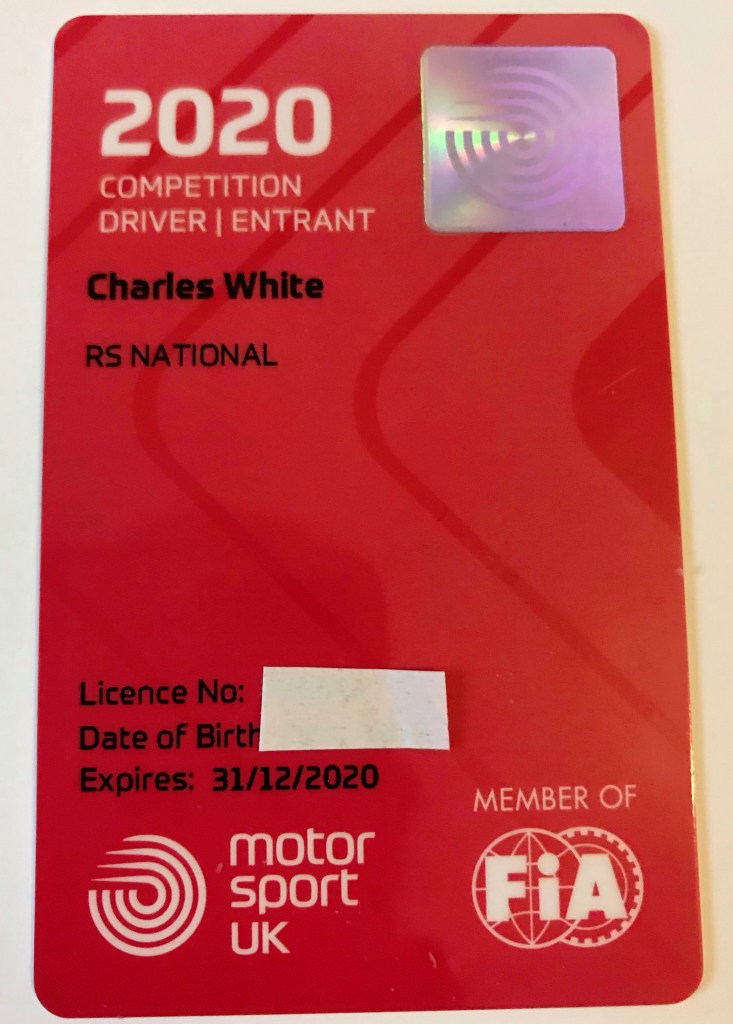
An upgraded license to Speed RS National may be obtained by using the card provided by MSUK to obtain signatures from the Clerk of the Course at six separate meetings. Once the signatures have been collected, you fill in a License Application Form and send the form, signature card and an upgrade fee to MSUK who will issue the upgraded license. You will find that entries are more readily accepted for ‘RS’ License holders and of course you may enter and drive Single Seater Racing Cars in Speed events. Those who are in possession of a ‘RS National’ Race License will be able to drive all types of cars in Speed events without restriction.
What kind of car can I use?
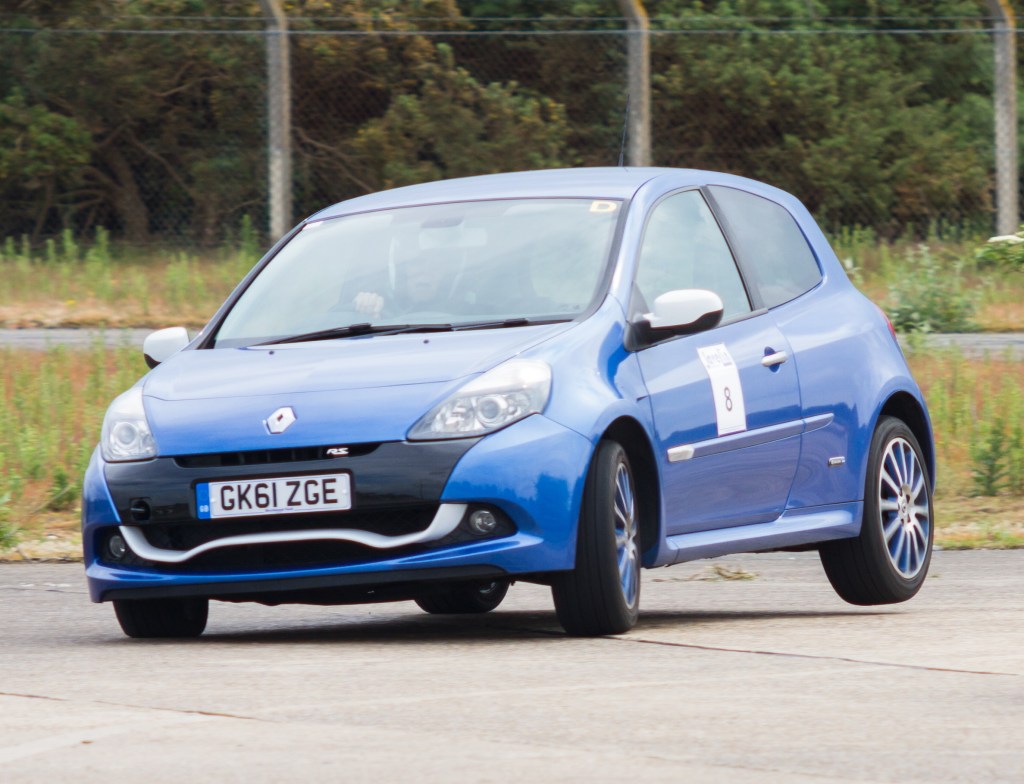
As a rookie driver with a Speed RS Interclub license you are mainly restricted to Road Cars of any capacity [including modified classes] that are licensed for road use. You cannot drive Racing or Sports Libre cars of more than 1100cc [apart from certain classic cars or those licensed for road use] unless you hold a Speed RS National license. See Blue Book, S 7.1.5/7.1.5.1.
There is a class for Standard Road saloon or sports cars [Blue Book S 11.]; if your car is less than 2 litres and unmodified from standard this may be an excellent first class to begin your career. Turbo powered cars will be hit with an equivalence formula of 1.7 and must be under 1175cc to be eligible. Tyres need to confirm to Blue Book Section ‘L’ List 1A.
If your ‘Road Class’ car engine is turbo or supercharged, then an Equivalency Formula of 1.4 must be applied. See Blue Book, S 10.4.1]. This means that you must multiply your cubic capacity by 1.4; which in most cases will put you into a higher class category. i.e. 1800 cc x 1.4 = 2520 cc.
In ‘Road Class’, Convertible cars may run open, with the Tonneau fitted or with a standard hard roof and a roll cage is not usually required. Some clubs will treat cars with non-ferrous bodies [i.e. Lotus] or space frame chassis and separate them into their own class. Bear in mind that ‘Road Class’ regulations are quite flexible and a high degree of modification from standard is allowed; this means that your lightly modified or standard saloon or coupe will tend to be outgunned in most events.
Modified cars that are not road licensed should have a competition log book. [Blue Book, S 9.1.7].
You are out of luck if you own or wish to compete with an Electric or Hybrid car. Most Clubs are currently unwilling to accept entries for Hybrid & Electric Cars as they are unable to fully comply with the current MSUK requirements for safe handling of such vehicles. However, MSUK are introducing a new set of regulations to cover Electric vehicles in competition and current guidlines to organisers are to be revised.
How may I prepare my car?
We are mainly concerned with cars defined as Standard cars or Road Cars [including Modified] here and there is very little extra work required to prepare a car for Speed Sports. A well-maintained car with current MOT is a good start. Check fluid levels and tyre and brake pads for wear. There is quite a lot of leeway in the technical aspect of what modifications may be done and a close scrutiny of section S of the Blue Book should be made.
Check that your tyres are on the lists in Section L, 1A or 1B [Section ‘S’ 11.4 or 12.4].
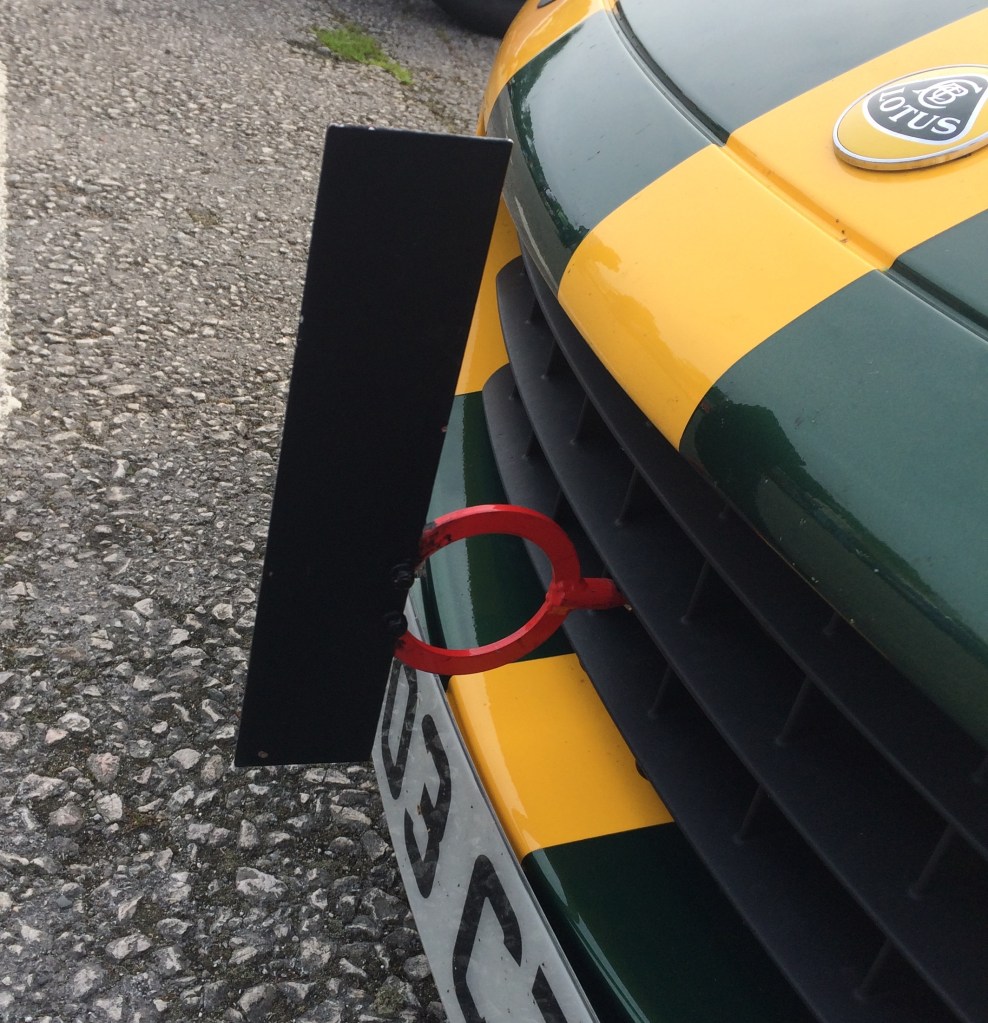
A timing strut needs fitting as Blue Book, ‘S’ 10.10. Don’t mount it too close to the ground or you may find that the strut may bottom-out on heavy braking.
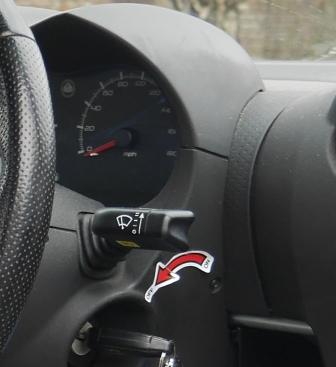
A sticker attached close to the ignition key indicating which way it ‘turns off’ is also required.
The negative battery terminal must be marked with yellow insulating tape.
Road-going cars must run on pump fuel which for most cars will probably mean running on 97 octane petrol although alternative fuels including LPG and Methanol are possible for Sports Libre and Racing Cars [Blue Book, S 10.6 and J 5.13].
Prepping the car
What clothing do I need?
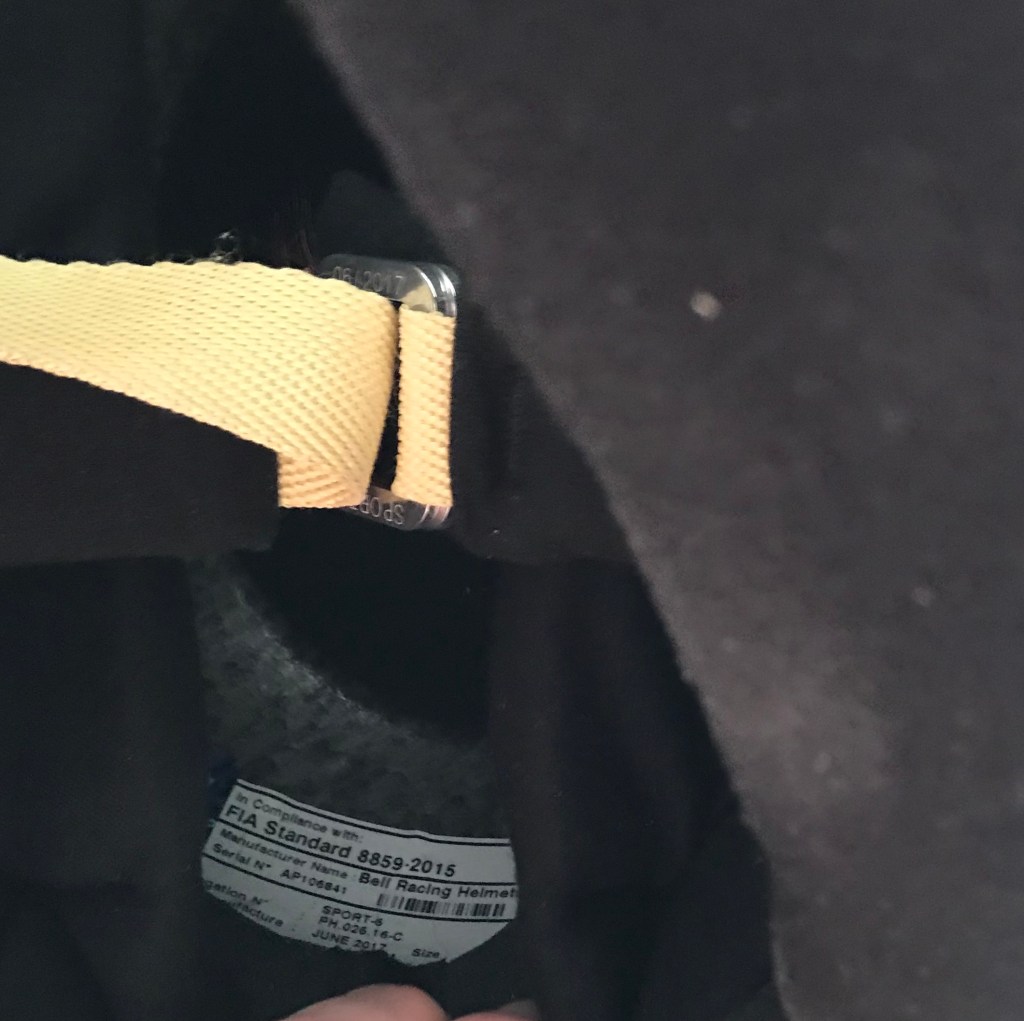
FIA std label 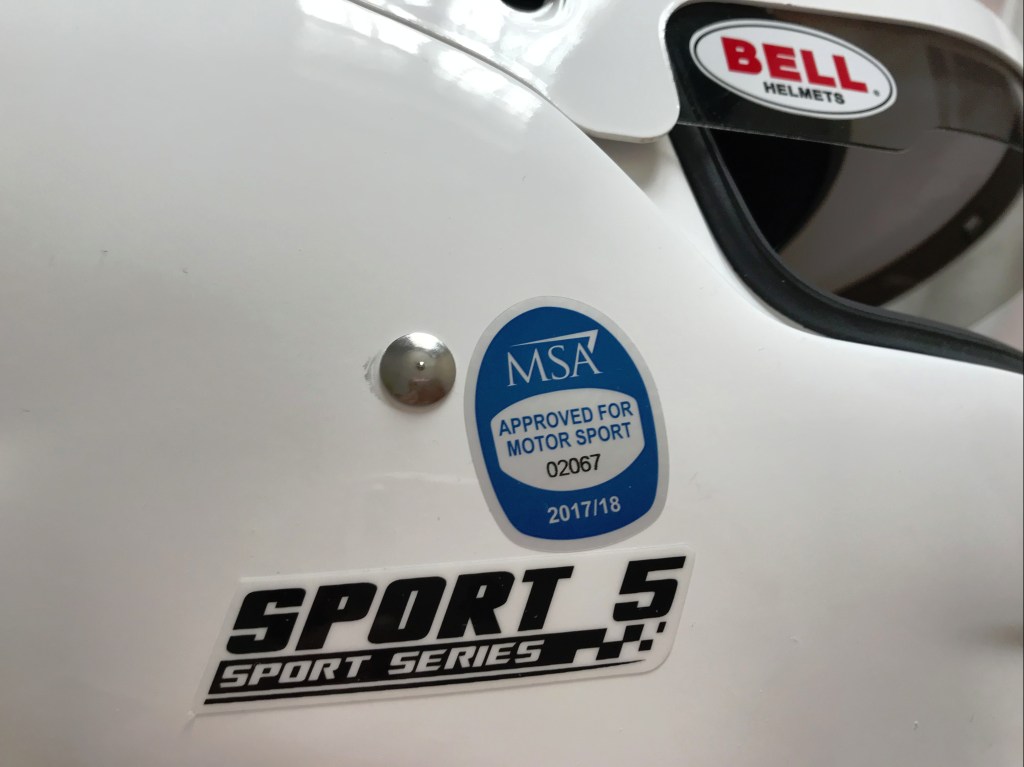
MSUK sticker
Firstly you will need a crash helmet that conforms to the regulations [Blue Book K10.3]. For saloon cars you may use an open-face type helmet although you might choose to use a full-face helmet for better protection. If your car is open top then you must use a full-face helmet with a visor or goggles [which must also conform to spec]. On presenting the helmet [full or open face] for its first check by a MSUK scrutineer; after inspection he will affix an official MSUK sticker upon it for which you will be charged £2.50. At all future events, scrutineers will check the sticker as part of their helmet inspection.
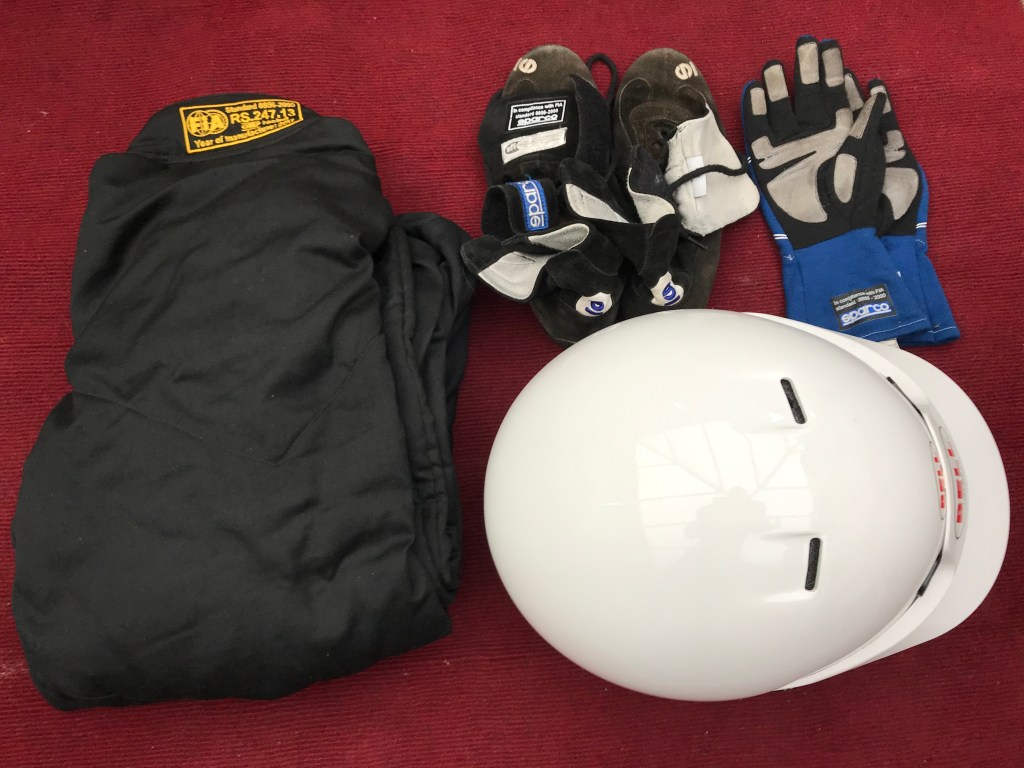
You will need fireproof overalls and gloves to FIA standard 8856-2000 [or gloves to older standard ISO6940]. All clothing must contain a label that denotes the standard]. Overalls to a number of older standards are also valid [Blue Book K9.1.4]; however, these older standard overalls are no longer available from any of the major Motorsport Clothing suppliers; but may still be used if a set in good condition is available to you]. Oddly enough, for Speed events, footwear is not required to meet any particular standard, although most drivers use soft boots that also conform to standard 8856-2000. A balaclava, socks and underclothing that also meet 8856-2000 or ISO6940 are not mandatory in Speed events; but many drivers wear these items to give themselves the best protection if the worst should ever happen! Likewise, an FHR [Frontal Head Restraint] device is not required for Road Cars but is mandatory for all other classes; again this is a device that is very desirable as it protects skull and neck injuries in whiplash incidents.
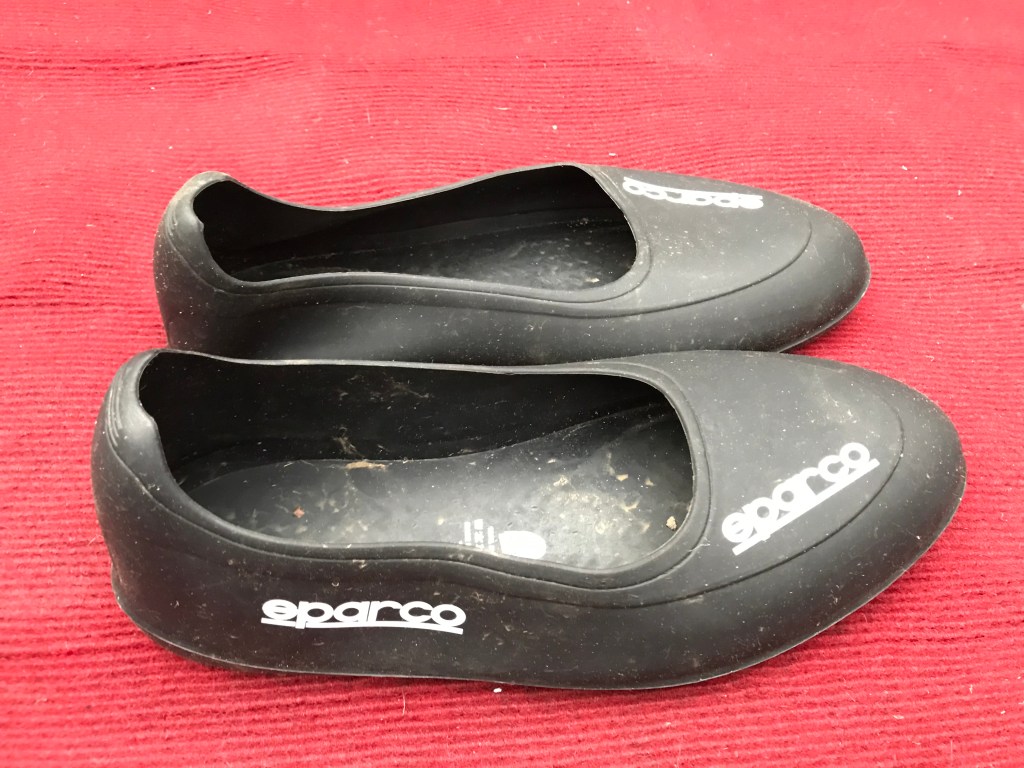
A pair of overshoes is a good purchase for those rainy days when the paddock is sodden wet. If you are parked on grass or the paddock is a grassy field then overshoes are almost essential to keep your racing boots dry and free from mud.
New Regulations, 2020
The MSUK Regulations were relaxed for 2020 and those driving Standard cars are not required [only recommended] to wear flameproof overalls, but must have arms and legs covered. In addition, those driving Road Cars are required to wear overalls that meet either the latest or a number of the older standards [Blue Book K9.1.4] which in practical terms doesn’t change much…
Entering an MSUK Speed Event
First you must belong to an appropriate club that organises the Speed Event in which you are interested [i.e. Hill Climb or Sprint Events]; alternatively, by joining an Association such as HSA and registering for the HSA Speed Championship, you are eligible for entering events organised by a wide range of clubs over the whole country. Regional Association such as ASWMC, ANWCC and ACSMC are also worth considering and Clubs that belong to the Regional Associations can be found in the Blue Book under Regional Structure. Some of the smaller local clubs and one-make clubs are often invited to events organised by other clubs and so by choosing your club wisely you may be offered the chance to compete in many different events. If you have a particular car, i.e. Lotus, you will find that there is a club that caters only for Lotus and organises a Lotus Cup UK Speed Championship. Belonging to a one-make club can also lead to invitations from other event organisers who may invite a number of different clubs to their events. If you don’t have a particular club in mind then you could conduct a search online. However, MSUK has a database covering all affiliated clubs https://www.motorsportuk.org/Clubs/Find-Clubs and using it is almost certainly the easiest and most straightforward method of searching for your most appropriate clubs. Browse the website of all tracks on which you might like to compete. They will list the meetings, associated clubs and much other information. A further way of searching for events is to utilise the MSUK website. https://www.motorsportuk.org/Events/Find-Events – you can also try a Google search.
Most clubs or associations can be joined online after you have logged onto their website. Most motor clubs will also post a fixture list for the forthcoming season and this list is often available towards the end of the preceding year or early in the New Year. Join one or more clubs and you will usually receive a regular newsletter and details of forthcoming events. Draw up a calendar of events that have caught your interest.
Supplementary Regulations & Entry Forms are usually available several months before the event; download and read them carefully. Note which class is appropriate for your car and also the Championship in which you are driving. Secretaries of meetings generally encourage online applications for their events although, in some cases, it is still possible to send an application by post. Entries for a particular meeting are usually open two to three months before the date and the last date for entries may be as late as one week before the event. By and large, Secretaries of meetings tend to allow all the entries to arrive over time and once the final entry date has passed, pick those with the best qualifications, or for the championships being run and finally the least qualified in order of entry received. As a rookie driver you are usually bottom of the list. However, you may improve your chances by getting your entry in early. If offered a reserve place then take it… Reserve drivers are usually allowed to practise and almost always get to run as not all drivers entered for the event will turn-up.
A short while before the event, the Secretary of the meeting will advise you [usually by email, although some secretaries still use post] of whether you have been accepted, rejected or are a reserve. Once accepted, Final Instructions will follow shortly before the event, usually by email although some clubs post details on their website rather than send them to individual entrants. Final instructions will indicate your competition number for the event, timetable on the day, paddock position for your car, running order and anything else that you need to know. Read carefully. If, for some reason you cannot attend, then always advise the Secretary as soon as possible. You may be due a refund of all or part of your entry fee, although this is less likely as the date of competition approaches. In the event of a meeting being cancelled [it does happen from time to time] the meeting secretary will normally fully reimburse competitors, although a small amount may be withheld [if stated in the supplementary regulations].
Multiple Drivers
A maximum of two drivers may use the same vehicle. They must enter separately, although the entry form will allow you to state that the vehicle is double driven and the name of the other driver.
Where can I stay?
What happens on the day?
Before you leave home: Always reread the organiser’s notes and final instructions and pack everything that you are likely to need… I have a checklist that ensures that nothing of importance is forgotten. Most important, remember to take your MSUK licence, organising event’s Club card and Championship Entry card [if needed]. Failure to show these at sign-on can have serious repercussions and if you forget your competition license, you will be reported to MSUK and will pay a fine of £72.00 – you have been warned!
A typical Speed meeting may go something like this: you will arrive early in the morning [typically around 7 AM] and on arrival in the paddock will find your allotted paddock parking place. If your car is entered in a Road Class then you may have driven to the circuit or you may arrive with the car on a trailer. Some circuits have less paddock space than others and after unloading, you may be required to park your trailer in a specified trailer park. The Supplementary Regulations or Final Instructions may detail the earliest time that you may run your engine. Typically 08.30 and additionally, there may be a quiet period to coincide with a local Church Service. Contravening this order may result in exclusion from the meeting.
The paddock at a Hill Climb may be on the side of a hill and slope alarmingly. If so, the final instructions will invariably detail a route that means you will always approach your paddock location from the upside which obviously saves wear and tear on the grass, mainly prevents wheel spin and keeps things moving smoothly – particularly if the day is wet.
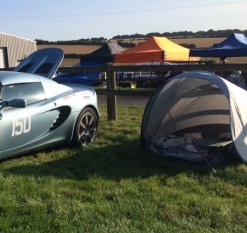
Pop-up Tent 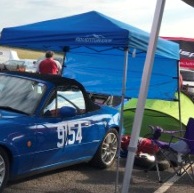
Gazebo
A useful accessory to carry is a small pop-up tent that can be erected in your paddock space.
This keeps all of your tools and belongings in the dry or out-of-sight during the day. Some competitors use a tarpaulin to the same effect but it is less convenient. If you have the room, then pack a gazebo which is useful for shielding you from the rain and sun and camping chairs for yourself and your helpers. Although most people bring one or more friends, or relatives as helpers or even mechanics. It is quite possible to attend a meeting on your own and many competitors actually do it alone.
Unload the car and prepare it for scrutineering. Remove anything inside the cockpit and boot that may move during your sprint runs. I utilise both a lap/diagonal seatbelt for road-use and a four-point harness for competition use; this requires me to tuck away the seatbelt and unfurl the harness ready for the day’s entertainment. Attach the timing strut [if necessary]. Open the bonnet so that the scrutineer arrives he has immediate access to the engine compartment.
An in-car video camera is allowed so long as it is attached firmly to the car interior. Suction cups can only be used if another form of attachment is also used to firmly secure the camera should the suction cup lose adhesion – as frequently happens. Helmet cameras are also disallowed.
Place your competition numbers on the car door. If you are sharing the car with another competitor, you will have been given numbers that are closely linked. i.e. 75 and 751 or 125 and 25 or even 54a and 54b. On swapping drivers after the first driver has completed his run, it is a matter of placing or removing a black strip across the additional digit.
A small number of organisers will obligingly supply you with numbers when you arrive [usually for a cash charge]; but the majority will require that you bring numbers with you. Numbers are available from such suppliers as Demon Tweeks. If your car has a metallic body, then it is useful to affix your numbers to magnetic backing plates. This particularly useful for those that drives to the circuit as you can quickly remove the plates before you drive home. It is illegal to drive when displaying competition numbers on your car [S9.2.6]; however, running strips of black tape across the numbers in a criss-cross fashion appears to bring a semblance of legality to the situation and competitors frequently use this method; be warned however, the supplementary regulations may disapprove of this method and so be prepared to remove the number completely. Where you are committed to a two-day meeting and are spending the night off-site, you may need a second set of numbers for the second day… On the other hand for example, when competing in the Classic event in the IOM, the authorities are quite happy for you to drive about the island proudly displaying your competition numbers.
Check tyre pressures and adjust as necessary. Usually, refuelling is to be carried out in a special refuelling area and you will incur the wrath of officials and possible exclusion from the event if you attempt it in your allocated paddock location. The final instructions will normally advise what procedure must be followed. Sign on at the organising club’s office where you will be required to show your competition license and club and championship card [if required] and return to the car to await the scrutineer who will check your car in your paddock space. Scrutineers normally check the cars in order of running and are mainly concerned with safety checks and that your car meets the class specification. The scrutineer will also check that your clothing meets the required standards.
Noise Test
Briefing
Usually there will be a mandatory driver’s briefing in which the organisers [often Clerk of the Course] will explain how the day will unfold, starting procedures and what flags will be used and any safety instructions and the procedure if your run is ‘red-flagged’. Often a mention may be made of cones and also track limits; touching a cone or abusing track limits may incur a penalty, which is usually the voiding of that run. The changeover procedure for dual drivers will also be discussed.
As the Briefing ends, the CotC [Clerk of the Course] will invite questions. If something is unclear then do ask the question. At some meetings you may be issued with a wristband or asked to sign a register so that the organisers are aware that you have attended the briefing. Where a record of your attendance is required; you will not be allowed to compete if you have missed the Briefing.
At some events this briefing will be only for drivers new to the track.
Walking the Course
At most meetings you will be encouraged to ‘walk the course’. The time for this is usually before the first practice runs and unless the course is relatively short and with all the other things to do, you may need to arrive at the track very early or even the night before if this ‘chore’ is to be accomplished. It has a useful purpose as you will note the track layout and topographical features more easily when walking slowly over it. On occasion [very rare in MSUK events] drivers may be asked to line-up and drive the course slowly in a long crocodile where you should note the location of the marshals’ posts, layout of the corners and any topographical features that may help you identify where to brake, turn-in and pinpoint the apexes and exit points. A lot to take-in.
Learning the course
Start Procedures
Back in the paddock you will wait for your turn to run. A paddock marshal will often strut the paddock and advise drivers of a particular Class when their turn is nigh. The first warning is often whilst the previous class is running and that should give you plenty of time to be ready. If your engine needs to be at operating temperature before your run then now is the time to start it to allow sufficient warm-up time. Pull your helmet on before leaving your paddock place as some organisers require that you must have helmet on and secured whenever the car is moving [MSUK regulations stipulate that on exiting from and until returning to the paddock you must be wearing your helmet and full safety clothing]. Procedures are slightly different according to whether you are competing in a Hill Climb or a Sprint.
Hill Climb
Entries are normally divided into batches. If you are sharing a car then one driver will be despatched in either the batch preceding or following the main batch of class in which you are entered. You will then join a queue, usually in number order, which will wind its way onto the start point for the run. As you edge your way towards the start you should quickly run through a checklist:
- Is your video camera switched on?
- Is your seat correctly adjusted?
- Are your seatbelts/harness in place and tight?
- Check that your helmet is on and secured [yes really – I once finished a run and then noticed that my helmet was undone] – the start marshal may not always notice…
- Check that all doors and windows are properly closed. If you have left the front passenger window/and or door open; you may not be able to close them when strapped in with a full harness. Ask a marshal or someone handy to shut them for you…
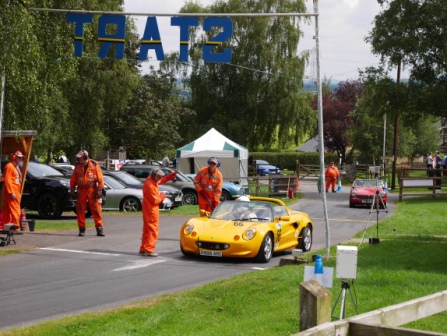
One or two cars from the start I will ensure that the driver’s window is closed. Once it is your turn, the start marshal[s] will position you just before the timing equipment and often chock your rear wheels so that your car cannot roll backwards. Typically you will be started by a set of traffic lights. You will check that the car is in gear and that the handbrake is off won’t you…once the light signals green you are ‘off’. The timing equipment will not trigger until you break the beam and so you have a few seconds to launch but don’t tarry – the start marshals won’t like it…
Every track has their own method of starting and the methods may differ slightly. If the track is quite short then drivers may be despatched singly to complete their run before the next driver is away. Often, drivers are despatched at specified intervals, although at Hill Climbs it is rare for more than two drivers to be on track at the same time.
At some, but not all, Hill Climbs, an area is allocated for you to warm your tyres by spinning the driven wheels. Where this area is not provided, then tyre warming is expressly forbidden. When your tyres are cold, the opening corners may be quite exciting… Do remember that the track may be quite slippery in the early morning under trees.
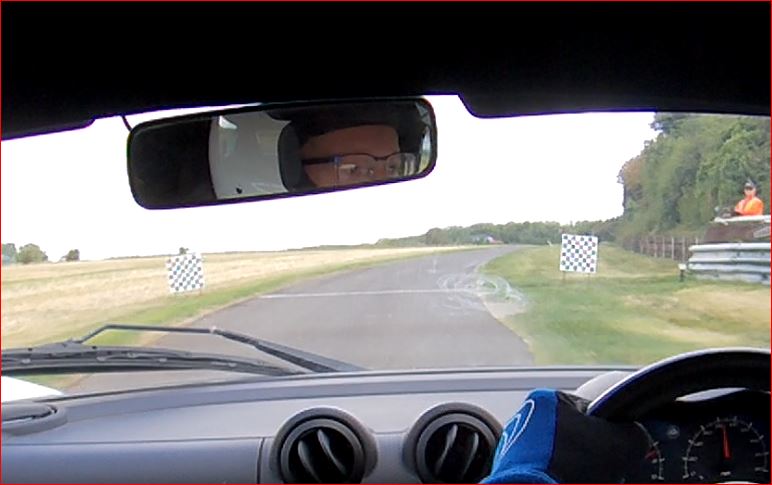
The Finish Line is normally denoted by a Chequered Board posted each side of the track. Once you have passed the Finish Line, lift the throttle and brake the car down to a manageable speed. If the Finish line is in the middle of a bend then be careful of your initial slowdown as it is possible to make the car unstable with abrupt deceleration.
For the majority of Hill Climbs you will be directed into a holding area until the remainder of your batch have completed their climbs. In a few cases – Prescott is a good example – you may be able to follow a return road back to the paddock. If there are a large number of cars in your batch and you are an early number, you might exit your car and either talk to the other drivers [it can be quite a sociable occasion at the top of the hill] or even find a printout of your time in a small hut in the holding area. But keep an eye on what cars are completing their runs as the marshals will not take kindly to those that hold up the return to the paddock. Do remember that your helmet and gloves etc must be on for the run back to the paddock.
The paddock at a Hill Climb may be on the side of a hill and slope alarmingly. If so, the final instructions will invariably detail a route that means you will always approach your paddock location from the upside which obviously saves wear and tear on the grass, mainly prevents wheel spin and keeps things moving smoothly – particularly if the day is wet.
Sprint
You will join a queue, usually in number order, which will wind its way onto the start point for the run. As you approach the start line, the marshals may organise drivers into mini-groups so that these mini groups of three or four cars will be on track simultaneously but at specific intervals. Once each mini-group has completed their runs and returned to the paddock, the next mini-group will be off. Sprint Start Gates are often set in the pit lane exit. As you edge your way towards the start you should quickly run through a checklist:
- Is your video camera switched on?
- Is your seat correctly adjusted?
- Are your seatbelts/harness in place and tight?
- Check that your helmet is on and secured [yes really – I once finished a run and then noticed that my helmet was undone] – the start marshal may not always notice…
- Check that all doors and windows are properly closed. If you have left the front passenger window/and or door open; you may not be able to close them when strapped in with a full harness. Ask a marshal or someone handy to shut them for you…
One or two cars from the start I will ensure that the driver’s window is closed. Once it is your turn, the start marshal[s] will position you just before the timing equipment. Typically you will be started by a set of traffic lights. You will check that the car is in gear and that the handbrake is off won’t you…once the light signals green you are ‘off’. The timing equipment will not trigger until you break the beam and so you have a few seconds to launch. Every track has their own method of starting and the methods may differ slightly. If the track is quite short then drivers may be despatched singly to complete their run before the next driver is despatched. Often, drivers are despatched at specified intervals which means that there could be up to three drivers on track at the same time. The interval between drivers is calculated to keep them apart and you are unlikely to catch the driver in front unless he is particularly slow or has a spin or other incident…
Tyre warming is expressly forbidden by any means for Sprints and you will always start with cold tyres which mean that the opening corners may be quite exciting…
If you are dual driving, then, depending on procedure, you will change drivers in the paddock or in the queue or at an allocated space near the Start. It is usually important to run within your allotted class and so the first driver should run at the beginning of the class and the second driver towards the end.
The Finish Line is normally denoted by a Chequered Board posted each side of the track. Once you have passed the Finish Line, lift the throttle and brake the car down to a manageable speed. If the Finish line is in the middle of a bend then be careful of your initial slowdown as it is possible to make the car unstable with an abrupt deceleration.
For Sprinting, the paddock entry is likely to be only a short distance from the Finish Line. Do not remove your helmet and gloves etc for the run back to the paddock.
The Meat of the Event
Practice will typically consist of just one ‘untimed’ run. The purpose of Speed events is to set the fastest time on your run. Each run may be likened to a qualification run in Formula One; however, keeping a cool head, driving smoothly and systematically working on your technique is the best way forward. On your first run, drive fast but within your limits. Try to determine your braking and turn-in points, apexes and exits – I know, a lot to learn but no-one said it will be easy. Subsequent runs should be spent honing the memory you hold for the previous run. Bear in mind that the racing line is all important and once established, you can start to brake later, carry more speed into the turn, accelerate harder and earlier.
In a MSUK Sprint you will make up to 3 Timed runs. For your first meeting at a track on which you have not previously competed or even for your very first competitive event, your primary target is to reduce your own times so that you set progressively faster times and by the last run of the day you may start to produce times that are close to others in your class. Some people are faster learners than others and it is no sin to take several events at a particular track before you are ‘on the pace’. Of course, even if you never reach the times that the top drivers in your class achieve, this may be due to a variety of reasons such as the competitiveness of your car and like the majority of competitors you do it just for fun.
Usually, within your class are drivers that are at a similar standard to yourself and it is fun to try and beat them and of course you are always competing against yourself in that every time you set a PB [Personal Best], you will want to beat it. For me, if I set at least one PB]in an event, often shaving milliseconds off my times, then it has been a successful meeting – no matter where I might finish.
Flags
Results and Trophies
In this electronic age; results are usually available instantly and certainly after every run it is possible to go to the timekeepers’ hut and view and print-out both your run with various times and speeds and also that of your nearest competitors. Or, by logging onto the timekeepers’ website with your smartphone, you don’t even have to move away from your paddock location.
Results of each run will normally be posted somewhere near the Admin office during the event. Many events utilise specialist timing companies that will post times on the Internet in real time during the event. If you log onto their website then you will be able to check your own time – and that of your nearest competitors – shortly after your run. Companies that provide this service include:
http://malvernmotorsporttiming.co.uk/ [see resultsman]
http://www.mcsrallyresults.co.uk/
http://www.smart-timing.co.uk/
https://www.swtimekeeping.co.uk/
https://www.timeteamtiming.co.uk/
You may need to determine which company is handling your own Sprint, although the organising club can sometimes advise you.
However, Hill Climbs will usually have a printer at the top of the Hill and for both Hill Climbs and Sprints there is usually a Timing hut somewhere in the paddock where times are available shortly after each run. The times are particularly useful as they usually give an analysis of your run with your time at various points on the course. You can often printout the times for all those in your class and can see where you are losing or even gaining time on your closest competitors.
An award ceremony is often held immediately after the event. If you have driven well enough to win a trophy then you will normally be presented with it at the ceremony. There will be an award for BToD [Best Time of Day] and Class awards and sometimes an award for Fastest Driver over a certain age and Best Lady Driver. There may be a number of special awards given by various sponsors or bodies for i.e. Best Lotus or a Class award may be sponsored by a local trader. Some awards are awarded for an event or class on an annual basis and you may be presented with a magnificent trophy that you can hold for 5 minutes before it goes back into the Trophy Cabinet – however, you are usually given a smaller trophy as memento.
 Grass Roots Motor Sport - UK
You must be logged in to post a comment.