
Speed – a UK grassroots Motorsport discipline
What the Motorsport discipline of Speed is about
Speed of course is a word frequently associated with Motorsport and conjures up images of high speed driving in all kinds of situations. However, in the UK it is also used to collectively describe the two Motorsport disciplines of Hillclimbing and Sprinting that are grouped together under the heading of ‘Speed’ Events.
MSUK Speed Events
MotorSport UK (MSUK) are the licensing authority for the majority of Speed Events put on in the UK and the affiliated Motor Clubs who organise them.
Javelin
A number of Sprint Series are also legally run by Javelin, a major Trackday operator, who operate outside of the MSUK umbrella and are well worth considering by the rookie [or even experienced] Speed competitor. Although the competition is similar, there are striking differences in how you enter and how the event is run on the day.
What Hill Climbs are all about
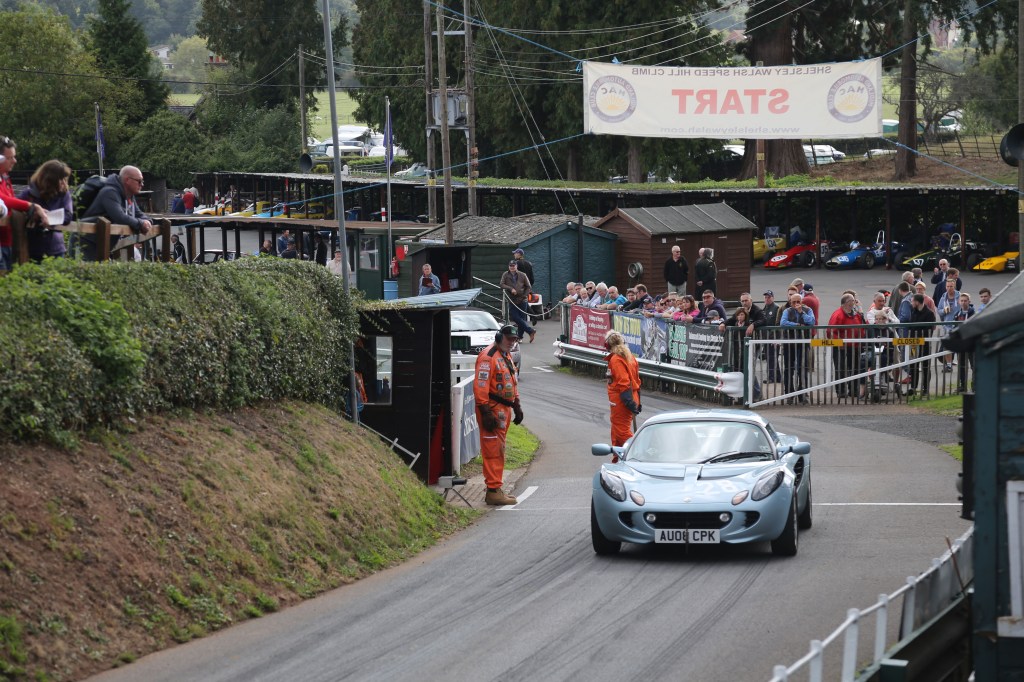
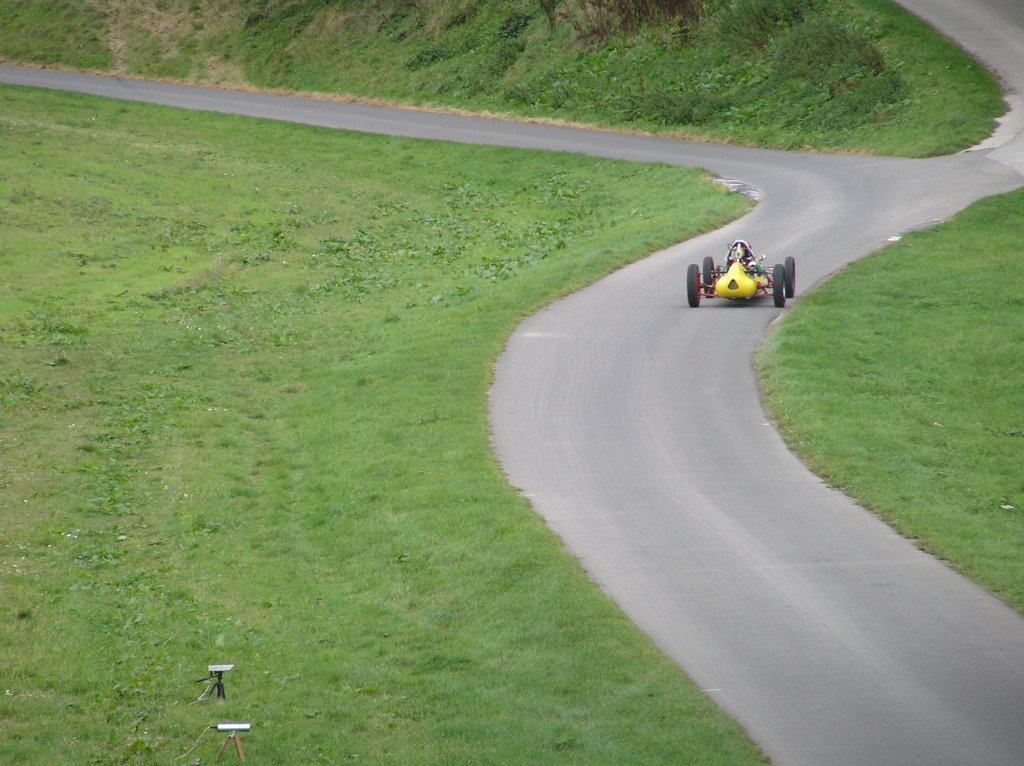
Hill Climbs in the UK are run on a Hilly, hard paved course. Suitable cars line up in single file and are timed from a standing start over a short, twisty, upward reaching track that can range from less than one half of a mile (800 metres) to one and half mile (2400 metres) through a flying finish. Cars may be started at 20 to 30 second intervals so that there may be more than one car on track at the same time; and although there is sometimes a small chance of a competitor catching the car ahead; the plan is to keep competitors apart. If a competitor does catch another, perhaps the first man has spun or suffered mechanical issues and the baulked competitor will normally be granted a rerun. What usually happens is that if one competitor has an ‘off’, the start of the second man will be halted – or if he has begun his run, he will be red flagged. Competitors who exceed the course limits or send a cone flying will be penalised with a ‘void run’. Two wheels ‘off’ the marked course may be tolerated, but a wayward car with all four wheels ‘off’ will be ‘voided’.
Cars are divided into classes and the competitors may be despatched in batches with each batch being held at a holding paddock at the summit of the hill until all cars in the batch have made their run. There is a break in proceedings whilst the batch returns to the lower paddock before the next batch begins their runs. If two drivers are sharing one car; the drivers will usually take their runs in separate/consecutive batches.
Depending on organiser, you may be offered one or two practice runs that are usually timed and two or three timed runs that will count towards your final position. Each run can be likened to a ‘formula one qualifying session’ in that the driver should be driving as hard as he and his car is able and will try to beat his previous fastest time. Spins and ‘offs’ are a way of life… The weather can play its own part and conditions may vary from wet to dry and anything in between – which all adds to the fun – or not… Fortune, good or bad, will often play its part during showery weather and one may be ‘lucky’ to set one’s fastest time on a dry or drying track whilst your closest rival may encounter wetter conditions – or vice versa… Tyre warming is allowed at some Hill Climbs – but not others – check regulations carefully. Where allowed, a ‘warm-up’ section will be allocated at a point just before the start gate. The competitor will ‘warm’ his tyres by dropping the clutch and spinning the driven wheels in this area. It is not mandatory to take advantage of this concession.
Results are determined by those that set the fastest times and there will usually be a competition for fastest time of the day [FTD] for which all competitors, [irrespective of class] will compete and also class awards. Depending on how many drivers are in each class, awards may be for first, second and third placed drivers. There may be other sub-competitions for certain classes and to determine overall results including some form of handicap. Sometimes there are awards for best ‘Lady Driver’ or ‘Best Veteran’ or maybe other awards at the whim of the organiser or indeed sponsor… Additionally, some meetings run a competition for ‘Class Winners’ or a ‘Top run-off’ for the best drivers on the day.
Even if a competitor is not in with a shot at the trophies, drivers often compete amongst themselves and will try to beat those around them in their class. Also, once you have set a time, it becomes a target and most drivers will attempt to better their own time over the day or over the season or even the previous season(s)….
What Sprints are all about
Motor Sprints as organised in the UK are a unique kind of event when compared to the definition of a sprint organised in some other countries of the World – which are often akin to racing on very short circuits – sometimes on loose surfaces. However, we are strictly concerned with Sprints in the UK. It is also true that UK Sprints may slightly differ in regulation or practice depending on who is organising them.
UK organised Motor Sprints can be likened to a Hill Climb competition; but on a flat, hard paved course that is usually far longer than the average UK Hill Climb… the course length may be anything from a half mile (800 metres) to three miles (4800 metres) and the course driven for one or sometimes two laps. Suitable cars line up in single file and are timed from a standing start over the paved course through a flying finish. Cars may be started at 20 to 30 second intervals so that there are often several cars on track at the same time; although there is sometimes a small chance of a competitor catching the car ahead; the plan is to keep competitors apart. Competitors who exceed the course limits or send a cone flying will usually be penalised with a ‘void’ run. Two wheels ‘off’ the marked course may be tolerated, but a wayward car with all four wheels ‘off’ will usually be penalised with a ‘void run’.
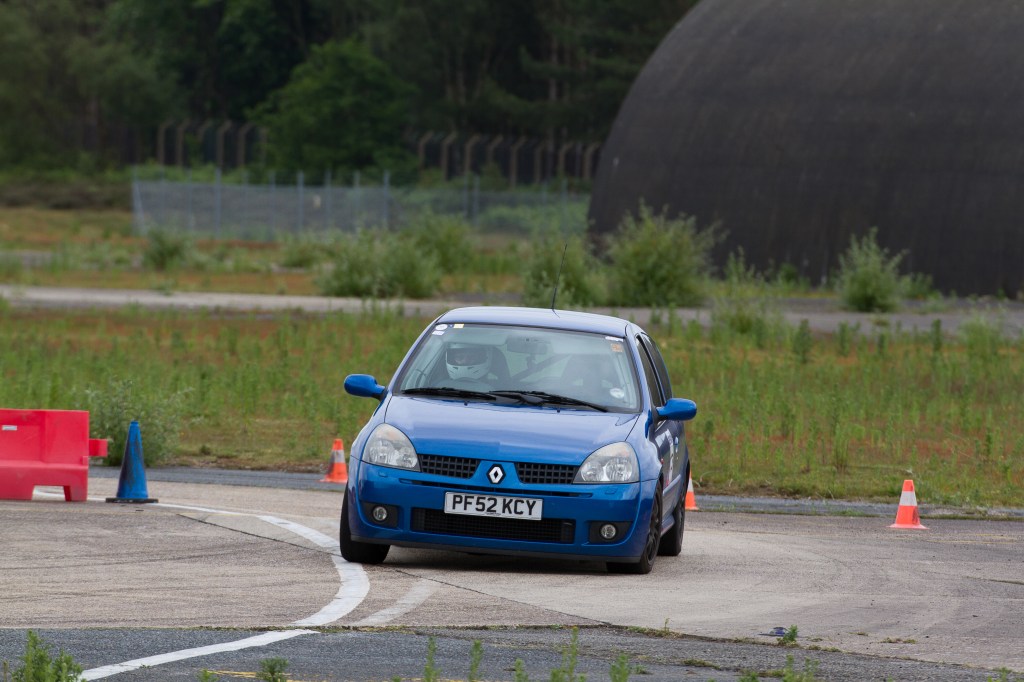
Typical sprint venues tend to fall into one of two types; either that of a permanent race circuit or a disused [or sometimes operational] aerodrome. If the Sprint is run on a race circuit the event may utilise almost a full lap or, in some instances, a full lap and part of a second lap. On an aerodrome, the organiser may lay out an interesting course that may vary from event to event.
Cars are divided into classes and the competitors are normally despatched in class order or the faster classes [or even drivers within classes] may be sent off first so that there is less chance of one competitor catching another. If a competitor does catch another, perhaps the first man has spun or suffered mechanical issues, the baulked competitor will normally be granted a rerun. After all classes have made their first run, the process is repeated throughout the day until all classes have completed their practice and timed runs and class and overall winners have emerged.
Depending on organiser, you may be offered one or two practice runs that are usually timed and two or three timed runs that will count towards your final position. Each run can be likened to a ‘Formula One qualifying session’ in that the driver should be driving as hard as he and his car is able and will try to beat his previous fastest time. Spins and ‘offs’ are a way of life… The weather can play its own part and conditions may vary from wet to dry and anything in between – which all adds to the fun – or not… Fortune, good or bad, will often play its part during showery weather and one may be ‘lucky’ to set one’s fastest time on a dry or drying track whilst your closest rival may encounter wetter conditions – or vice versa… Tyre warming is usually not allowed and each driver must start his run on cold tyres which can lead to a car feeling lively for the first few corners.
Results are determined by those that set the fastest times and there will usually be a competition for fastest time of the day [FTD] for which all competitors, [irrespective of class] will compete and also class awards. Depending on how many drivers are in each class, awards may be for first, second and third placed drivers. There may be other sub-competitions for certain classes and to determine overall results including some form of handicap. Sometimes there are awards for best ‘Lady Driver’ or ‘Best Veteran’ or maybe other awards at the whim of the organiser or indeed sponsor… Additionally, some meetings run a competition for ‘Class Winners’ or a ‘Top run-off’ for the best drivers on the day.
Even if a competitor is not in with a shot at the trophies, drivers often compete amongst themselves and will try to beat those around them in their class. Also, once you have set a time, it becomes a target and most drivers will attempt to better their own time over the day or over the season or even the previous season(s)….
A Brief History of Speed Events
The first known Speed Event in the UK occurred in 1899 when the Automobile Club of GB ran a 1.5 mile Speed Trial as part of an Automotive Efficiency Trial. The purpose of the trial being reliability rather than speed…
A number of events described as ‘Hill Climbs’ were also run around this time but an event was held at Bexhill-on-Sea in 1902 which consisted of a sprint along a public road and up a slight hill. This event nicely combined the spirit of what were to become speed hill climbing and sprinting. In 1905 the world’s first permanent hillclimb took place at Shelsley Walsh, which is the oldest motor sport event still held on it’s original track. Shelsley Walsh was the BBC’s choice for its first ever outside broadcast in 1932 and is also notable for being the venue where the renowned Stirling Moss began to make a name for himself; having first appeared at Shelsley in September 1948. In addition, the first Brighton Speed Trial also began in 1905 and this is regard as the oldest running Motor Race. Run over various format, for some years it has been settled as a quarter mile Drag Race although those competitors with a MSUK Speed License are the usual entry.
During the 1920s and 30s many clubs organised Speed events, drawing huge crowds of spectators.
However, Sprinting became more prevalent after WW2 with the availability of many ex-RAF airfields and soon became a popular grassroots motorsport and in 1970 the RAC launched a National Championship with ten rounds at Yeovilton, Greenham Common, Woodvale, Blackpool, Cadwell Park, Thruxton, Duxford, Curborough, Moreton-in-Marsh and Fairford. Cadwell Park and Curborough are still used today for Sprints and although Thruxton no longer holds Sprint Races; it is of course well known as a premier race circuit. The inaugural Sprint championship was won by Patsy Burt in her Mclaren-Oldsmobile and now, after 48 years, Heather Calder became the second woman to win the British Sprint Championship when, in 2017, she became champion in her 3.5 Gould-NME GR55. A feat that she repeated in 2018.
Acknowledgement to the book Hillclimbing & Sprinting by Phil Short & Steve Wilkinson and HSA for much of the above facts and information
Javelin Sprintdays
Javelin is a Trackday organising company that came into being around the turn of the millennium. Their first venture into sprinting was in 2008 with a series for Toyota manufactured vehicles to which they added an ‘X’ class for all other manufacturers; which eventually split into a series of different classes and so Javelin Sprintdays was born.
Hillclimbs or Sprints?
Which one first to compete in? A difficult question to answer; some drivers tend to specialise in one or the other and aside from the differences in set-up, Hillclimbs tend to be short, twisty with no run-off and one is also tempted to say ‘slower speeds’ until you see the phenomenal speeds reached by some of the single seat drivers. Mistakes resulting in an ‘off’ can be expensive and possibly painful. On the other hand, Sprints can also be short and twisty and very similar to a ‘flat’ Hillclimb; but those that are run on airfields or permanent race tracks are usually much faster and there is more chance of a decent run-off if mistakes are made. Reading up on all the advice in this Blog on the two disciplines may help you decide on whether to specialise or compete in both. Whatever you decide, do have a go; Hillclimbs and Sprints really are a lot of fun at whatever level you drive at.
How do I enter a Speed Event?
This really depends on what body is organising the event. In the UK there are two organising bodies for Speed Events. MSUK and Javelin: MSUK organises Hill Climbs and Sprints and Javelin organises Sprints alone. Both organisations are legally able to organise events and although the competition is similar, there are striking differences in how you enter and how the event is run on the day.
Much of the advice on this page is squarely aimed at the ‘newby’ to Speed events; and so, first things first. Before entering competition you need to know more about the sport and also whether a Speed Event is right for you. Entering and driving your road-going car in Trackdays is an excellent method of finding out if you are comfortable at high speed. Go to a Javelin Sprint Event or an MSUK Hillclimb or Sprint or all three and wander around the paddock. Talk to the drivers and you will find that most are more than helpful in giving advice on any topic linked to their sport [but do not approach them as they are preparing to start their run or at other busy times]. Join an internet or Social Media Forum and interact with drivers on the Forum. Much free advice is there for the taking. Forums on FaceBook include:
- Javelin Trackdays Sprint Series
- HSA – The Hillclimb & Sprint Association
- British Hillclimb Championship
- British Sprint Championship
MotorSport UK [formally MSA]
MotorSport UK is the main governing body for Motorsport in the UK and affiliated clubs throughout the country are licensed to organise Motorsport events including Sprints; you will most certainly need to join a local affiliated club before you may enter their events.
Join a local MotorSport UK club
Joining a local club that organises Speed events will give you the opportunity to talk to drivers and organisers and increase your knowledge of the sport. Moreover, by joining a national Association such as HSA or a regional Association such as ASWMC, ANWCC or ACSMC you will be able to enter a wide number of events that fall under the umbrella of these organisations.
Conversely, you do not need to join a club to compete at Javelin events.
Operational Differences
Because of certain differences in operation of Sprints by Javelin and Hillclimbs and Sprints by MSUK; we are going to examine the operation of each organisation separately in future Blogs.
Actually, some drivers are happy to compete in events held by both organisations…
This Blog is the first on a series in which we will look at competing in both Javelin and MSUK events.
 Grass Roots Motor Sport - UK
You must be logged in to post a comment.